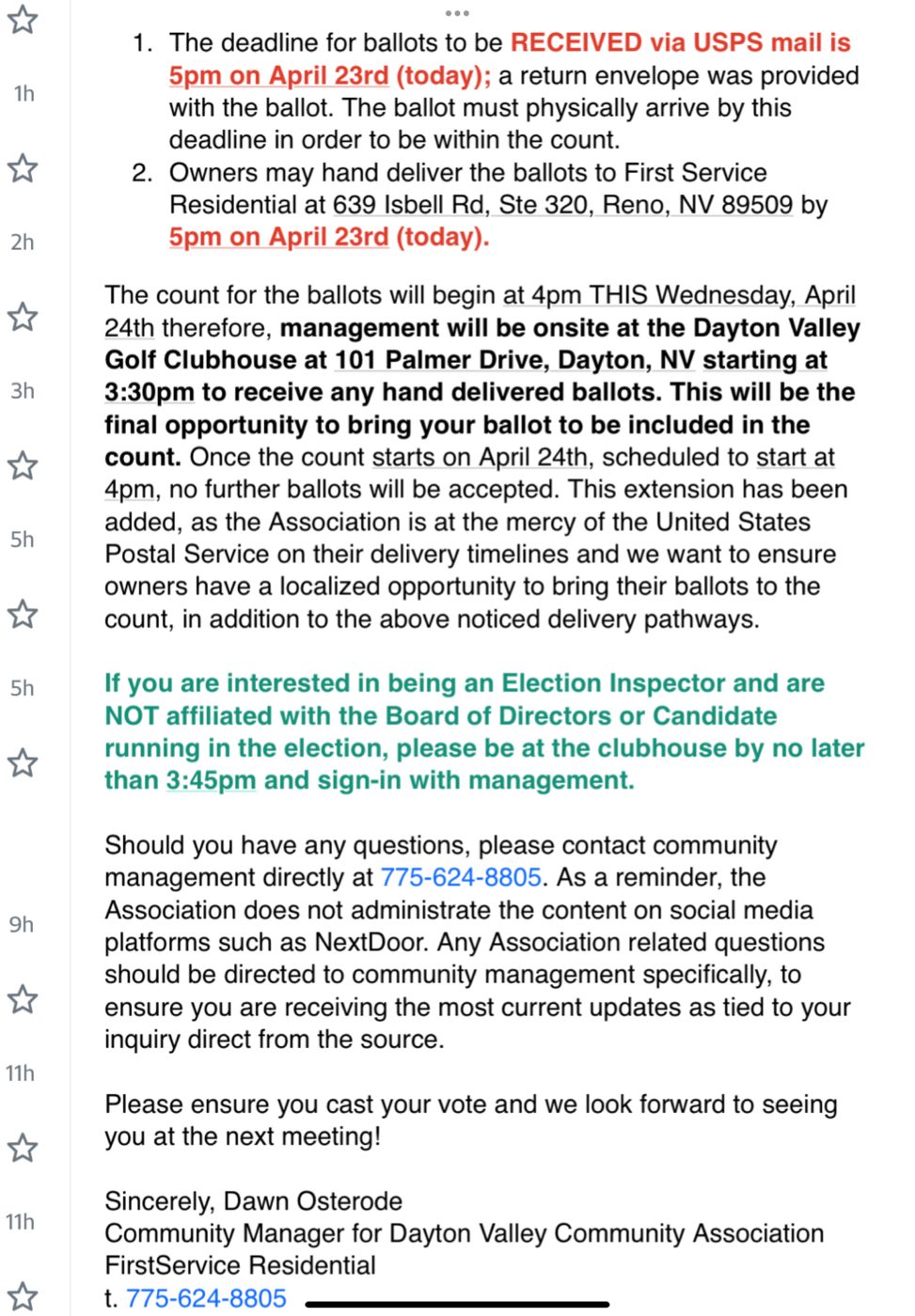
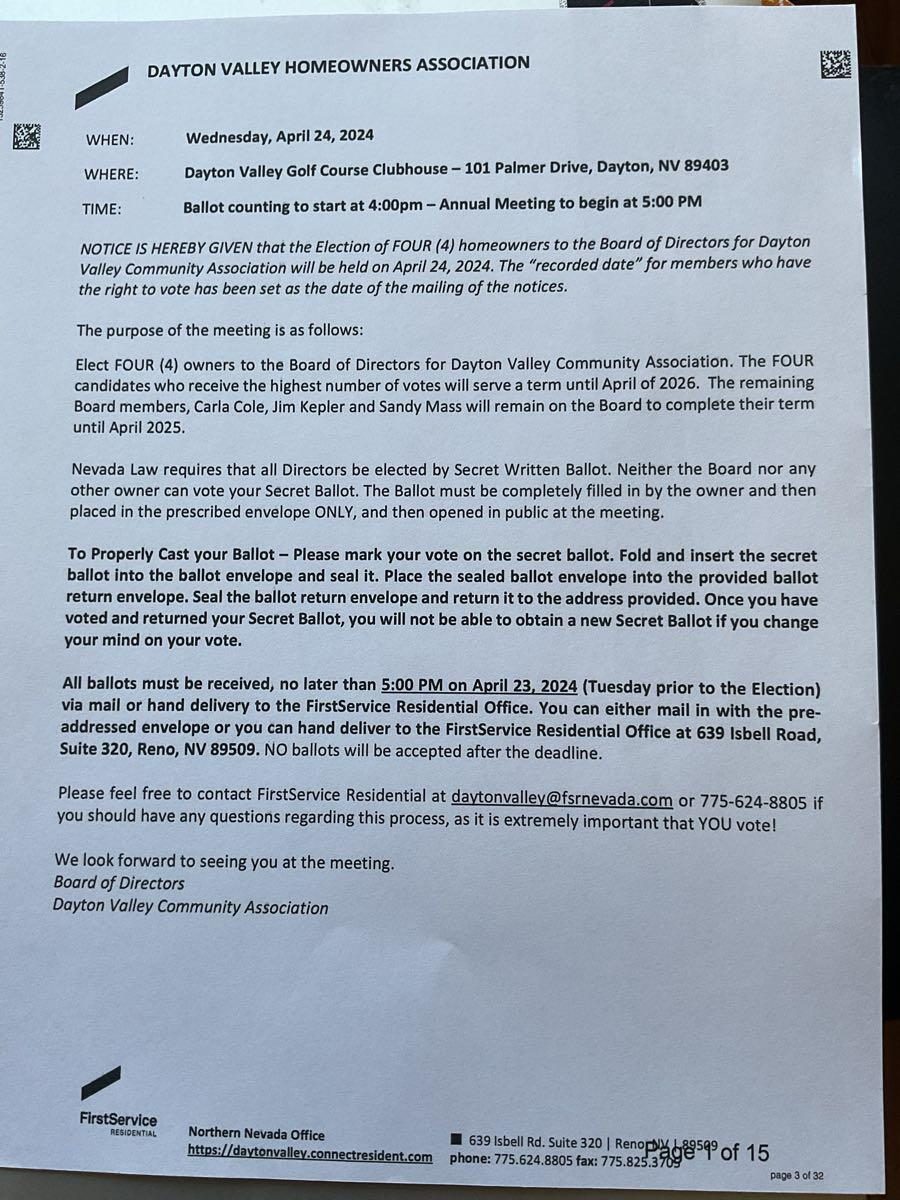
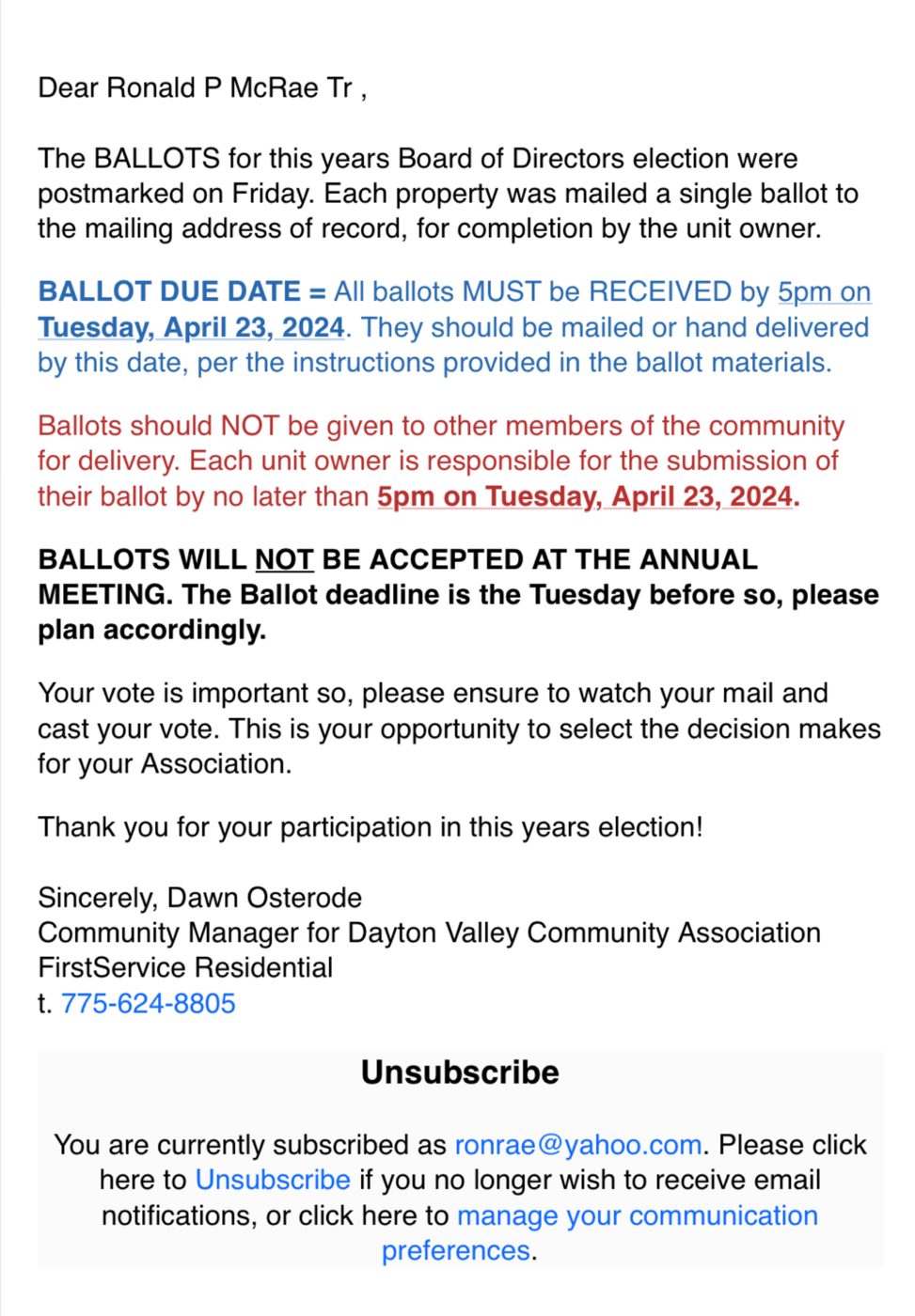
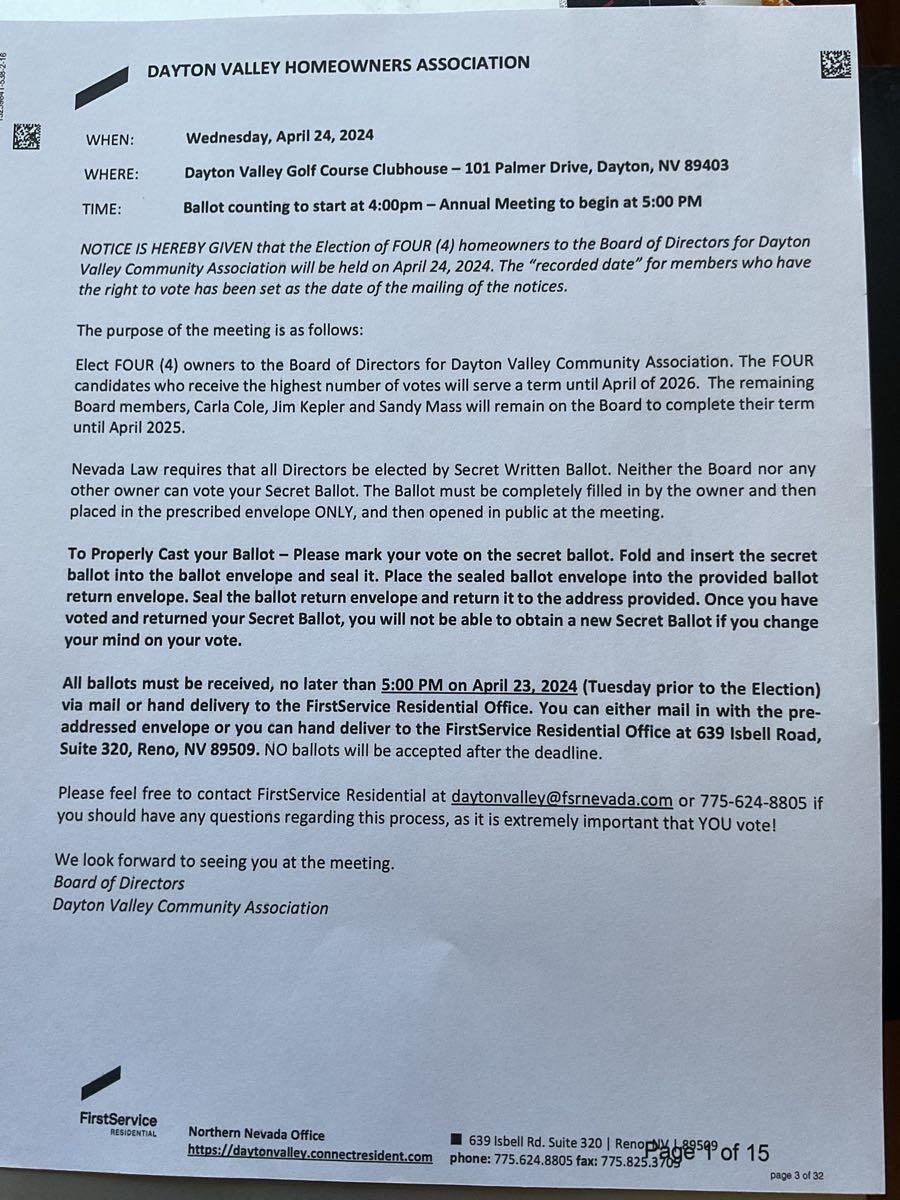
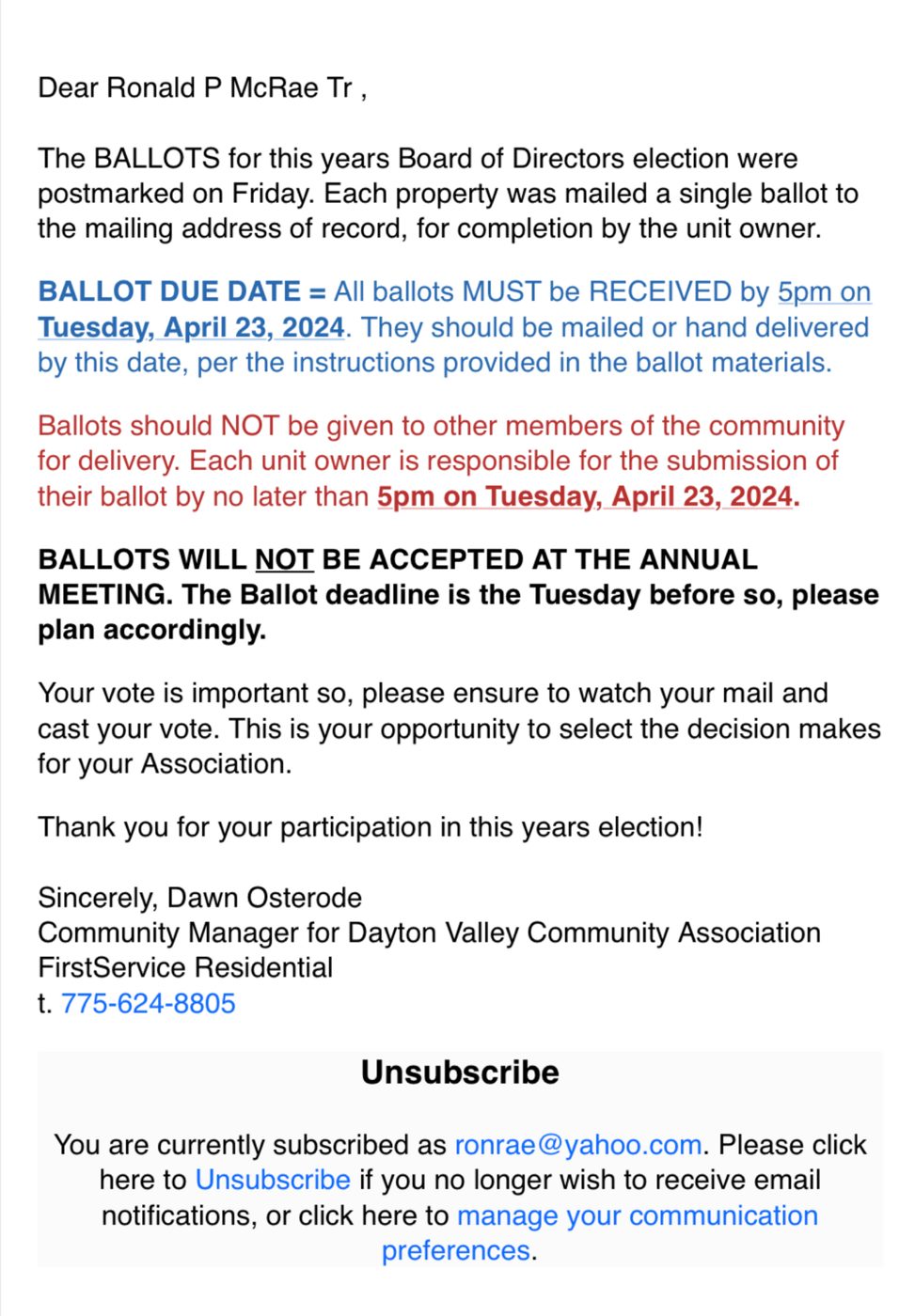
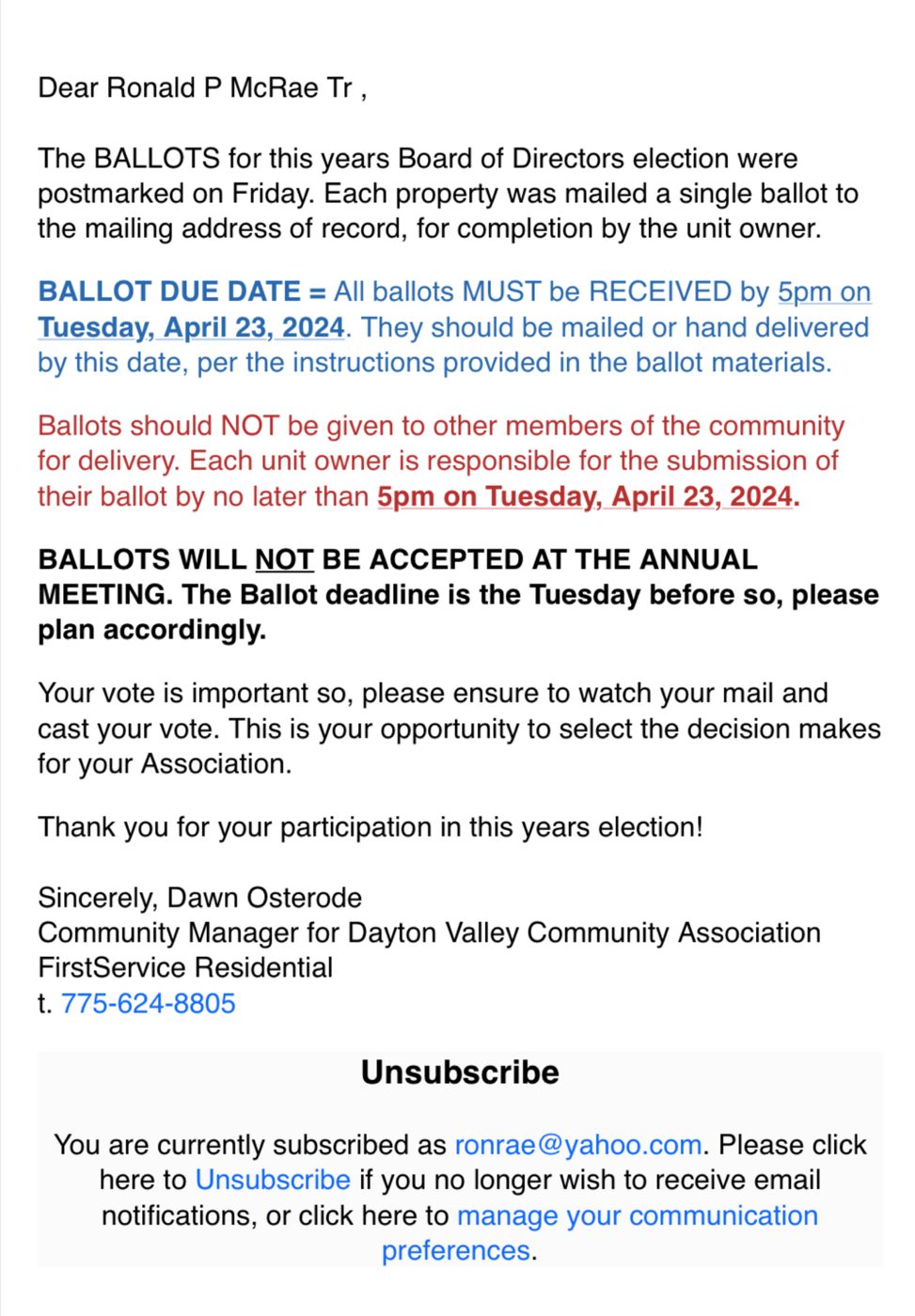
IMHO: We have a large elderly population here and we must do everything we can to increase voter participation. Please note that legal works for the board and homeowners can’t engage them directly.
The most important part of the correspondence is…
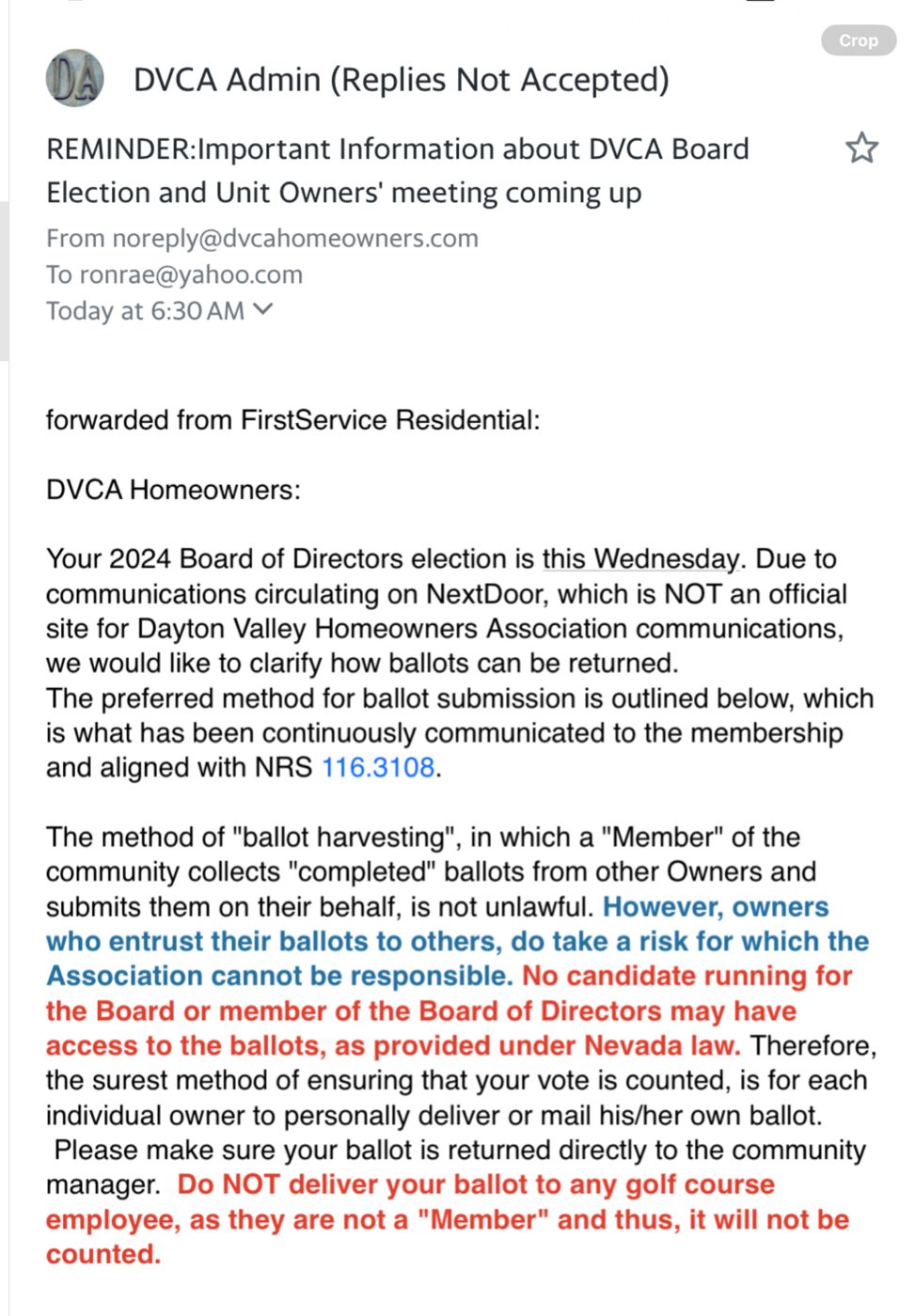
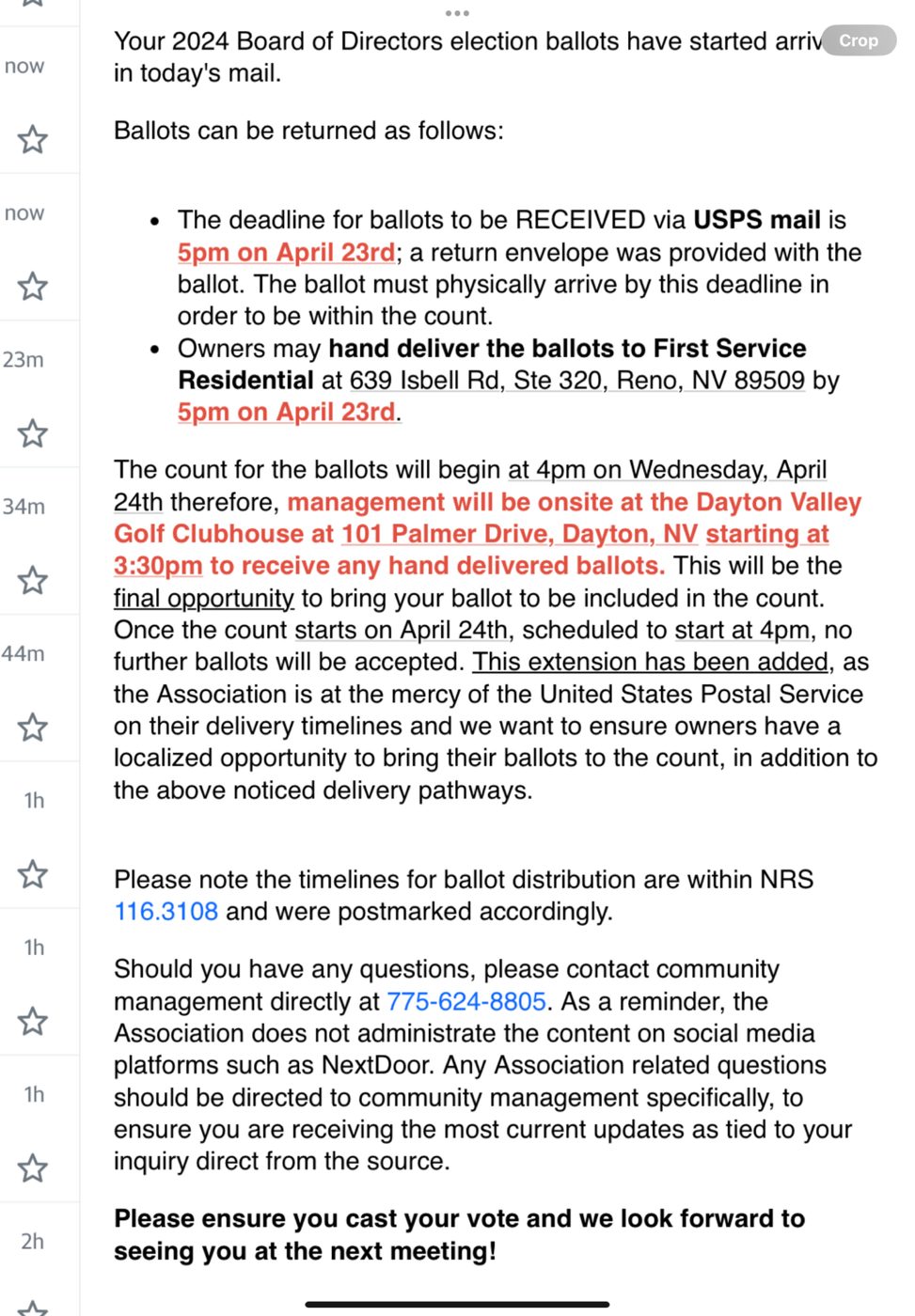
“However, there is nothing in NRS 116 which precludes an owner from gathering the completed ballots of friends and neighbors which those friends and neighbors have sealed in their individual return ballot envelopes and either dropping those ballots in the mailbox or hand delivering those ballots to the FSR office”
===============================
Relevant text below..
The Association’s Board of Directors has asked that its general counsel, LKG, respond to your election- related questions. Since Gayle Kern is not available, I am responding on behalf of LKG.
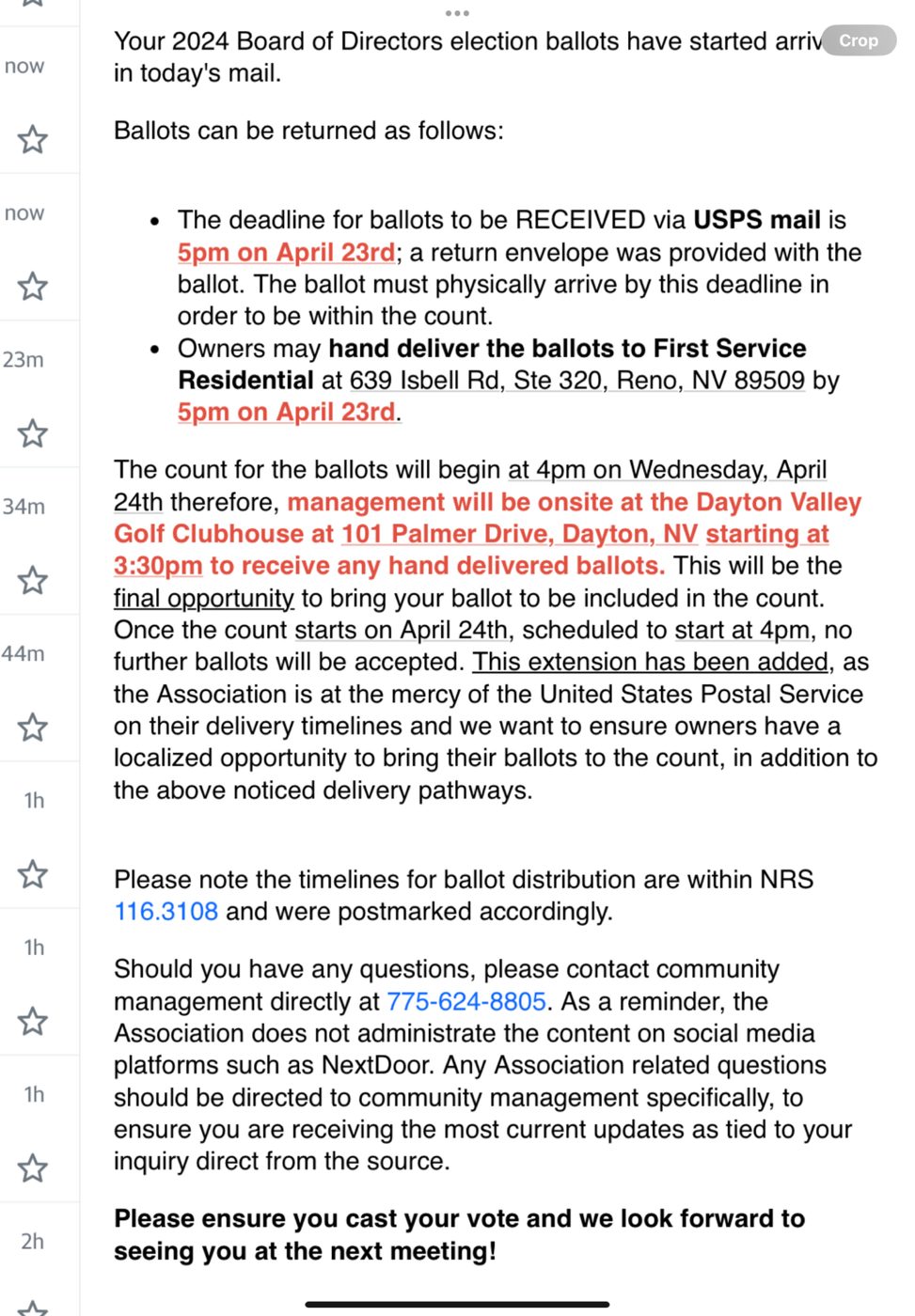
Turning to the question of whether you or any other member may “harvest” ballots (that is, gathering and delivering the completed ballots of other owners), Lyon County election laws do not apply to HOA elections. However, there is nothing in NRS 116 which precludes an owner from gathering the completed ballots of friends and neighbors which those friends and neighbors have sealed in their individual return ballot envelopes and either dropping those ballots in the mailbox or hand delivering those ballots to the FSR office. What is prohibited is attempts to fraudulently alter the election by engaging in certain prohibited actions:
NRS 116.31107 Voting by units’ owners: Prohibited acts; penalty.
1. A person shall not knowingly, willfully and with the intent to fraudulently alter the true outcome of an election of a member of the executive board or any other vote of the units’ owners engage in, attempt to engage in, or conspire with another person to engage in, any of the following acts:
(a) Changing or falsifying a voter’s ballot so that the ballot does not reflect the voter’s true ballot.
(b) Forging or falsely signing a voter’s ballot.
(c) Fraudulently casting a vote for himself or herself or for another person that the person is not authorized to cast.
(d) Rejecting, failing to count, destroying, defacing or otherwise invalidating the valid ballot of another voter.
(e) Submitting a counterfeit ballot.
2. A person who violates this section is guilty of a category D felony and shall be punished as provided in NRS 193.130.
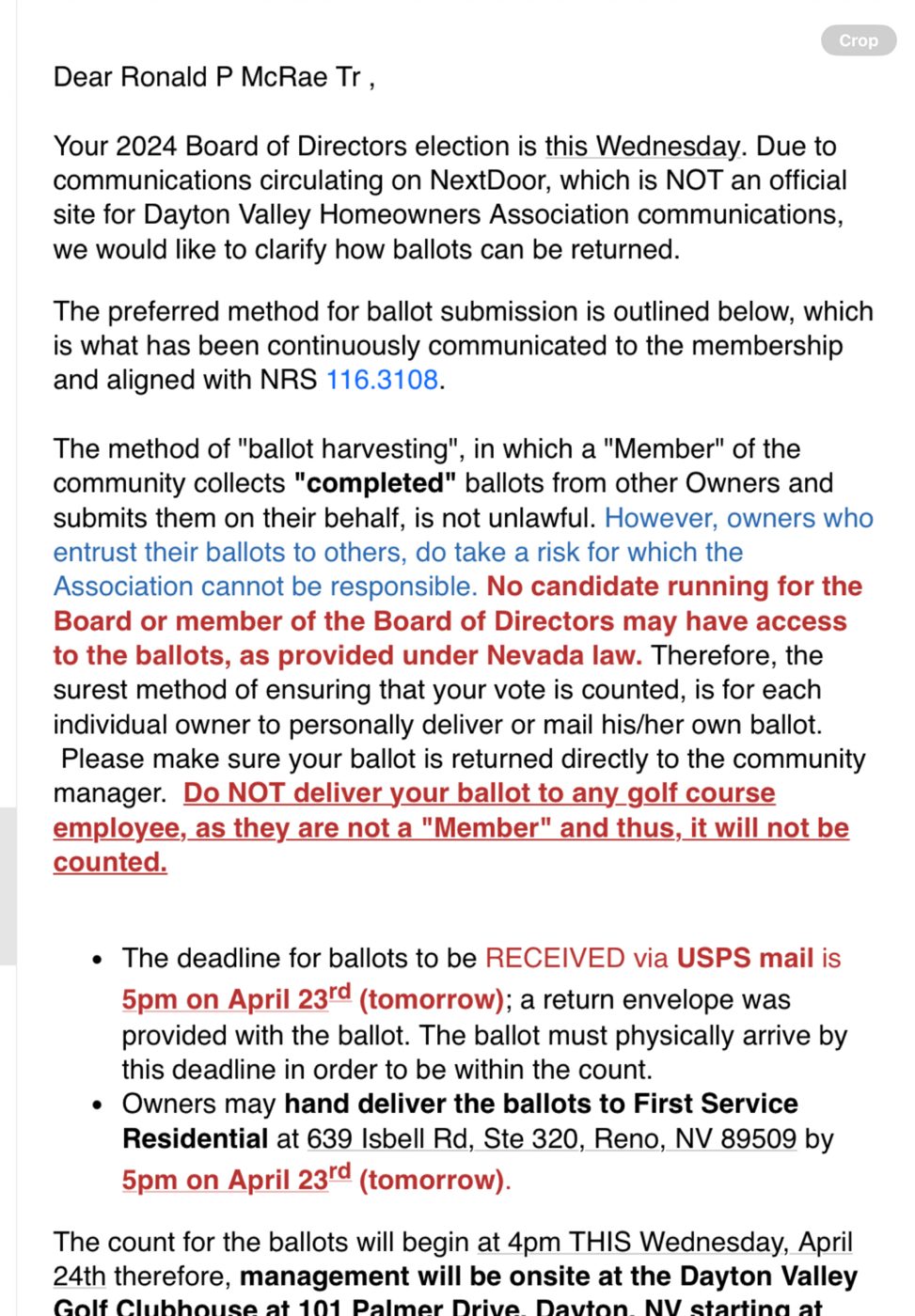
Owners who entrust their ballots to others do take a risk for which the Association cannot be responsible. Therefore, the surest method of ensuring that your vote is counted is for each individual Owner to personally deliver or mail his/her own ballot.
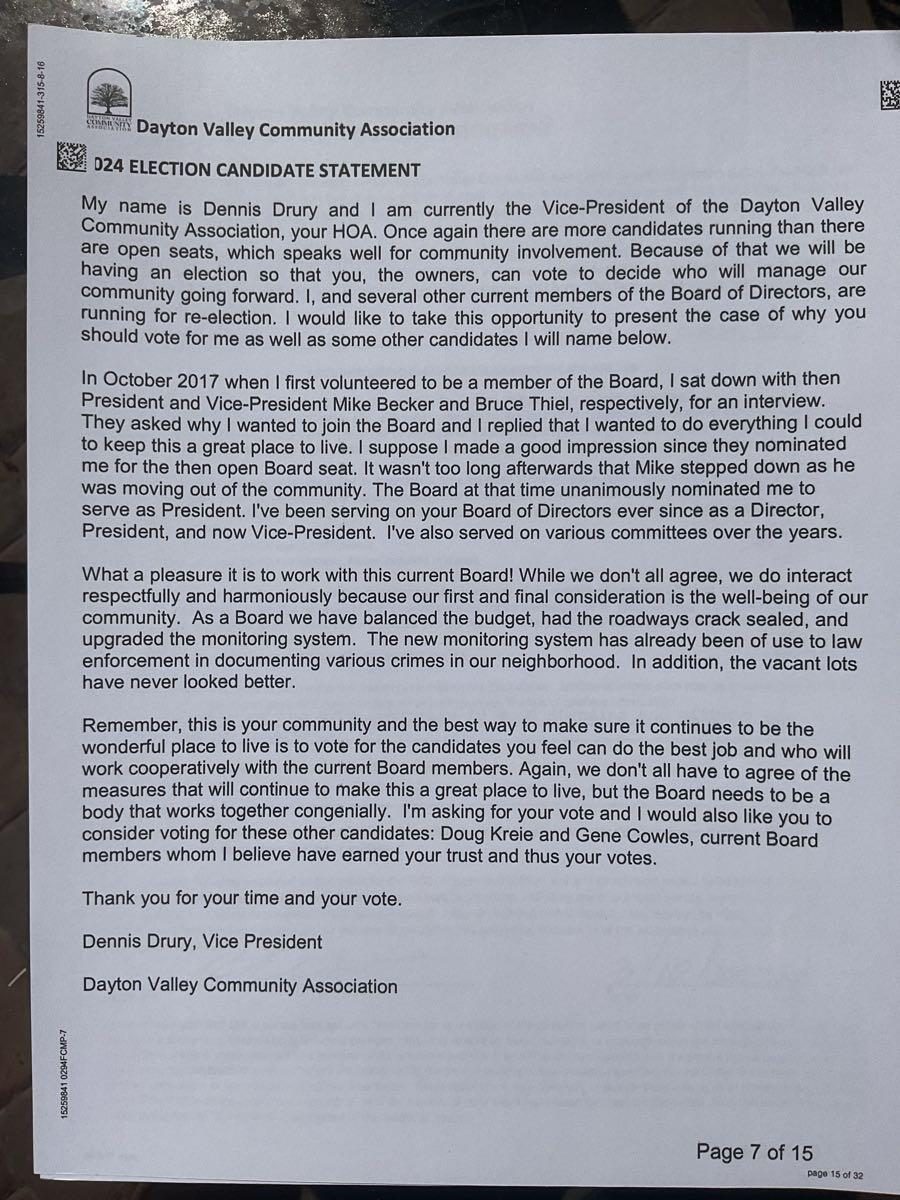
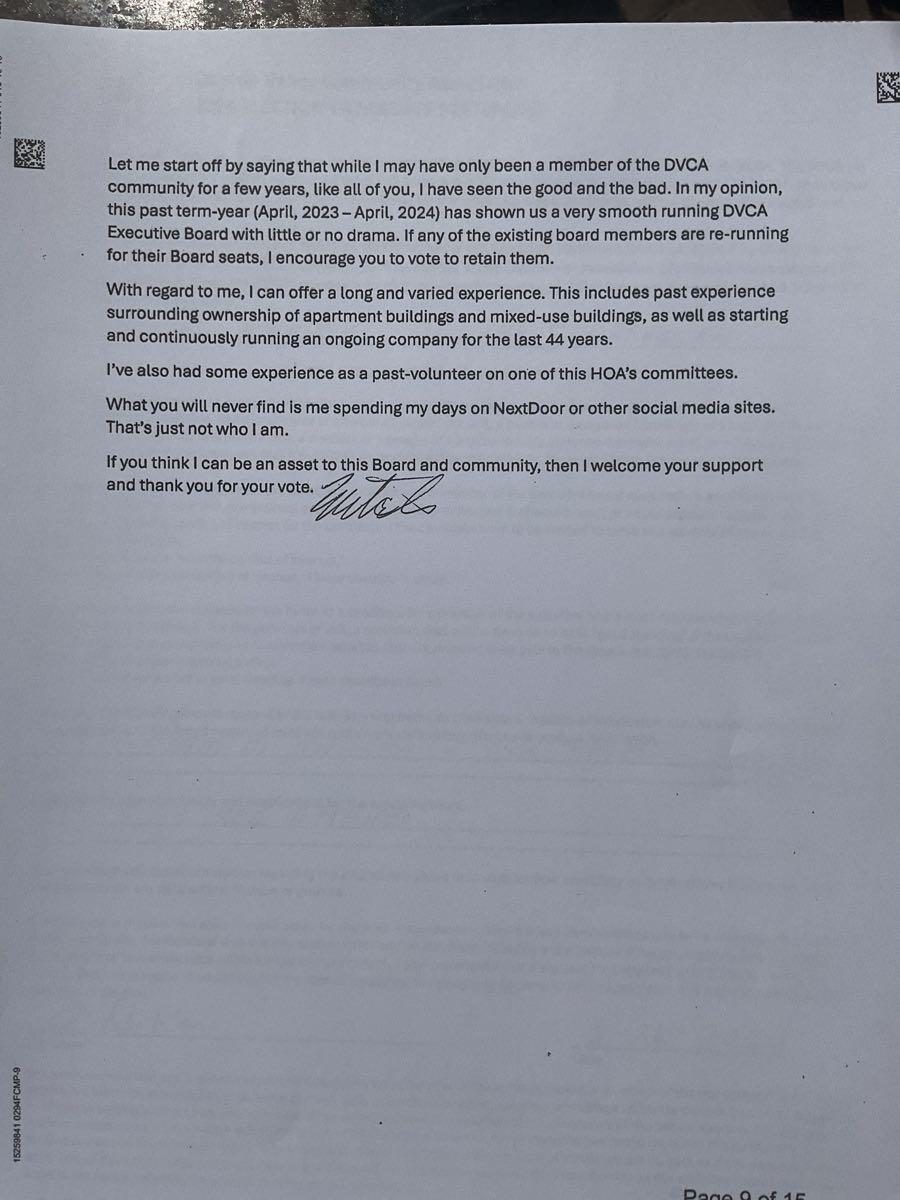
With regards to you in particular, you are a candidate for the Board. NRS 116.31034 (15)(f) places special restrictions on your access to ballots.
(f) The incumbent members of the executive board and each person whose name is placed on the ballot as a candidate for membership on the executive board may not possess, be given access to or participate in the opening or counting of the secret written ballots that are returned to the association before those secret written ballots have been opened and counted at a meeting of the association.
Clearly, once FSR receives the ballots, neither you nor any other candidate nor member of the board may touch the ballots until such time as the ballots have all been open, counted and the results announced. However, the definition of “possess” means “to have in one’s actual control.” During the period someone is gathering ballots to return to the association that person has actual control over the ballots and an opportunity to change a vote, fraudulently cast the vote or destroy a vote as per NRS 116.31107.
Therefore, to protect the integrity of the election as intended by NRS 116.31034 and NRS 116.31107 and to minimize potential election challenges, my opinion is that no candidate or incumbent director should harvest ballots nor should any person closely related to a board member or candidate. In the context of who may serve on the board, NRS 116.31034 defines “closely related” as being related by blood, adoption, or marriage within the third degree of consanguinity or affinity. This would seem to be a reasonable standard to apply to this situation as well.