DVCA Email Policy Claims Raise Eyebrows: What Really Happened in 2024?
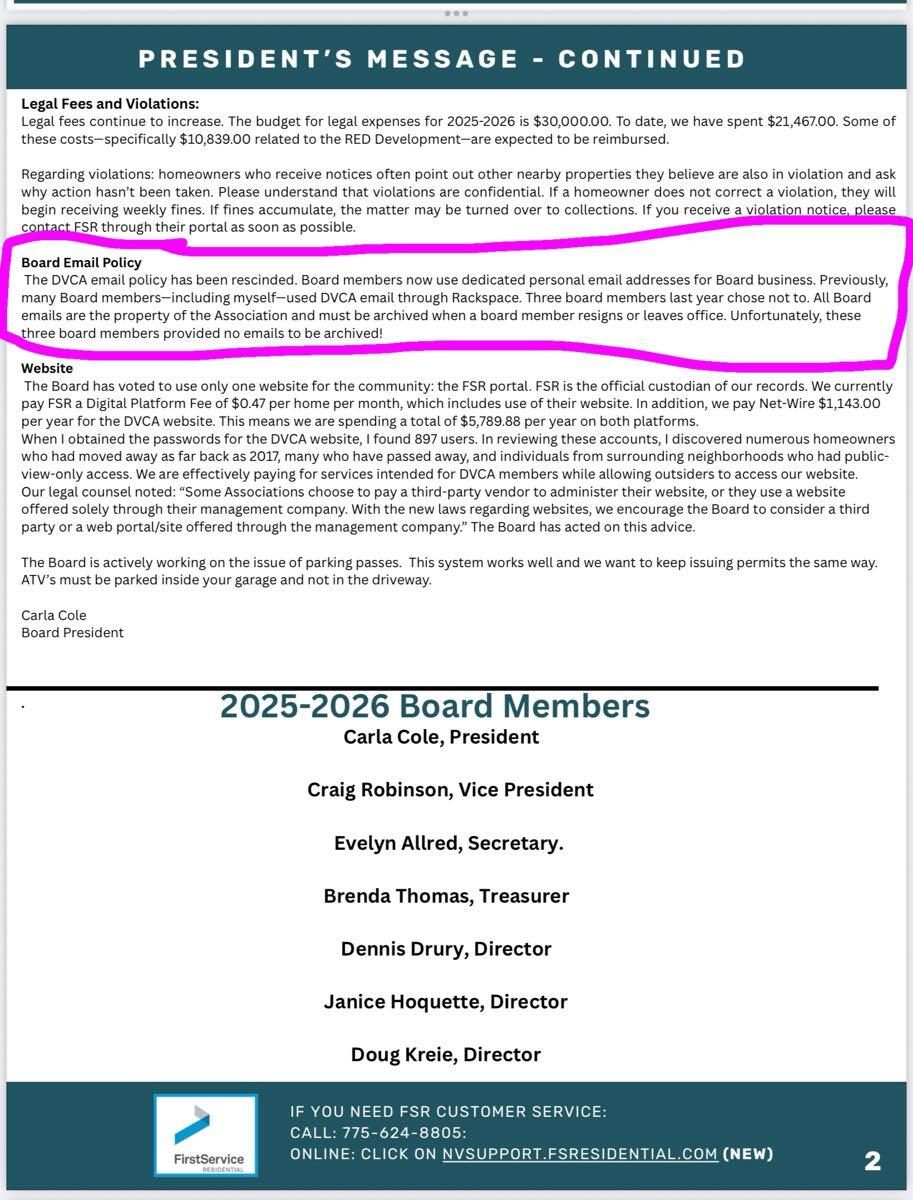
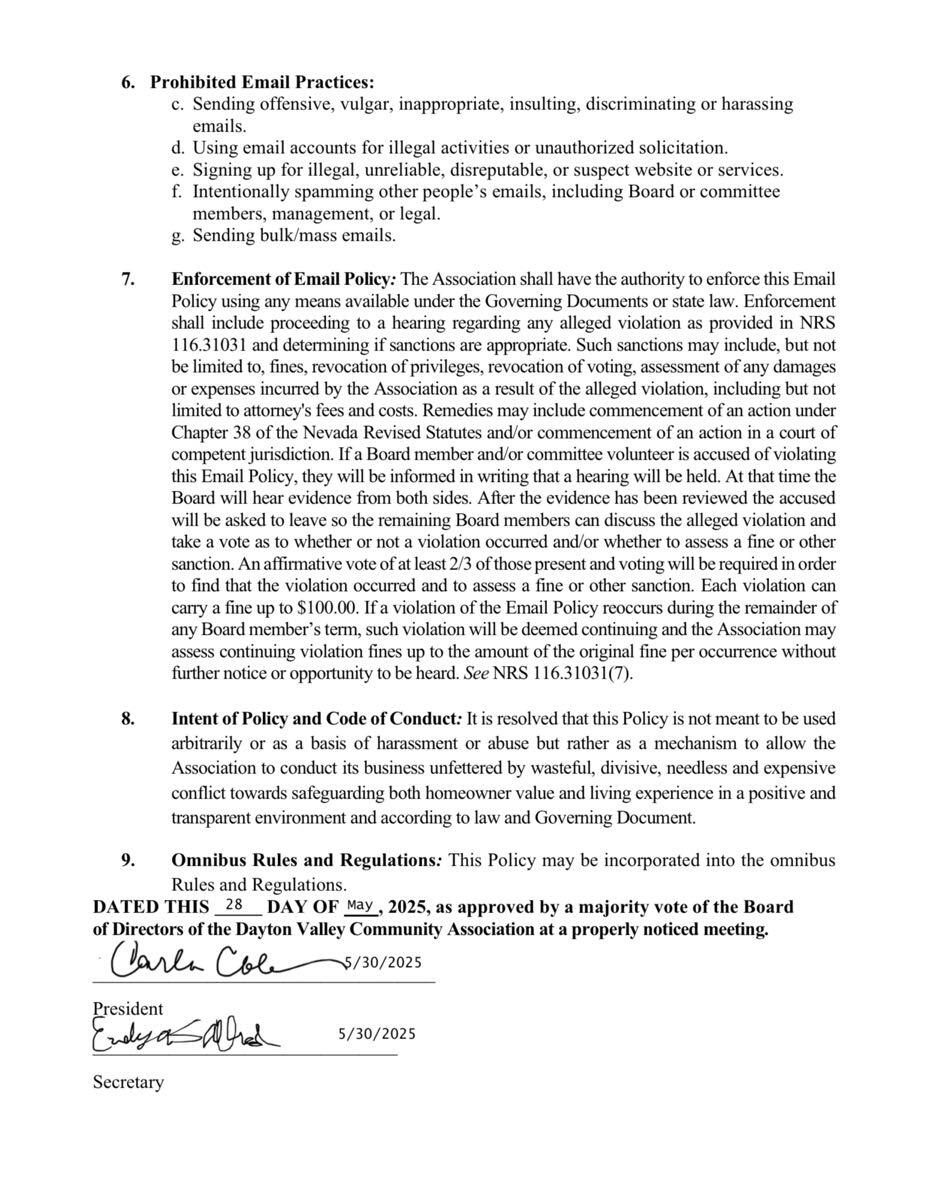
A recent statement circulating in the Dayton Valley Community Assn (DVCA) newsletter claims that “three board members provided no emails to be archived” following the end of their terms. But a closer look reveals that this narrative omits critical context and misleads homeowners about what actually occurred.
Here are the facts.
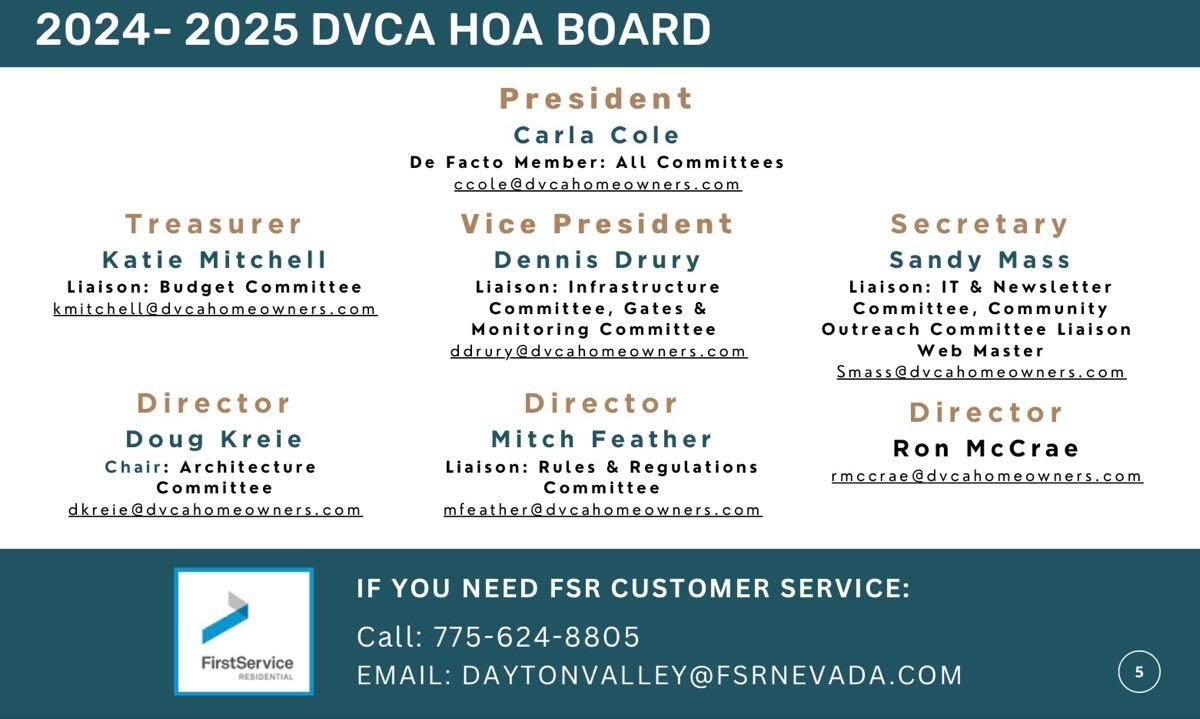
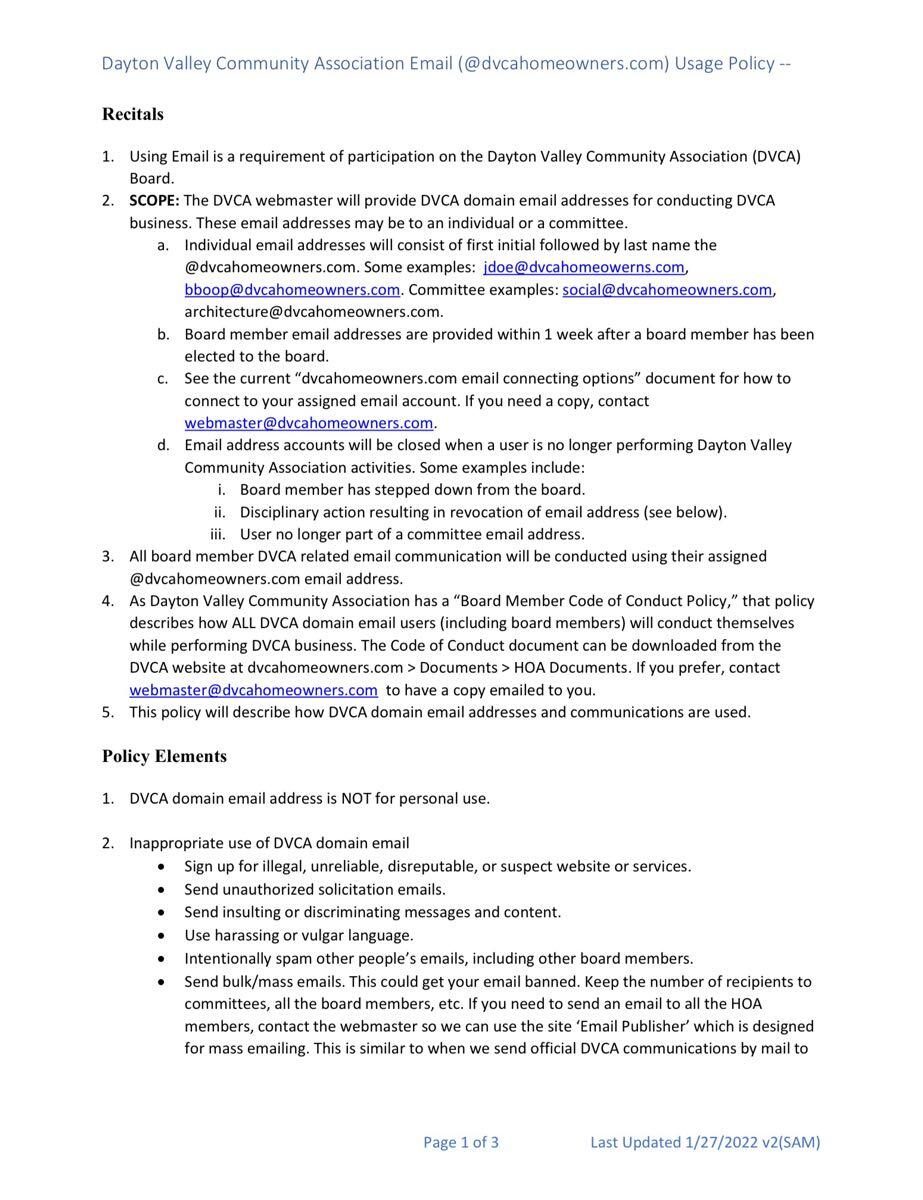
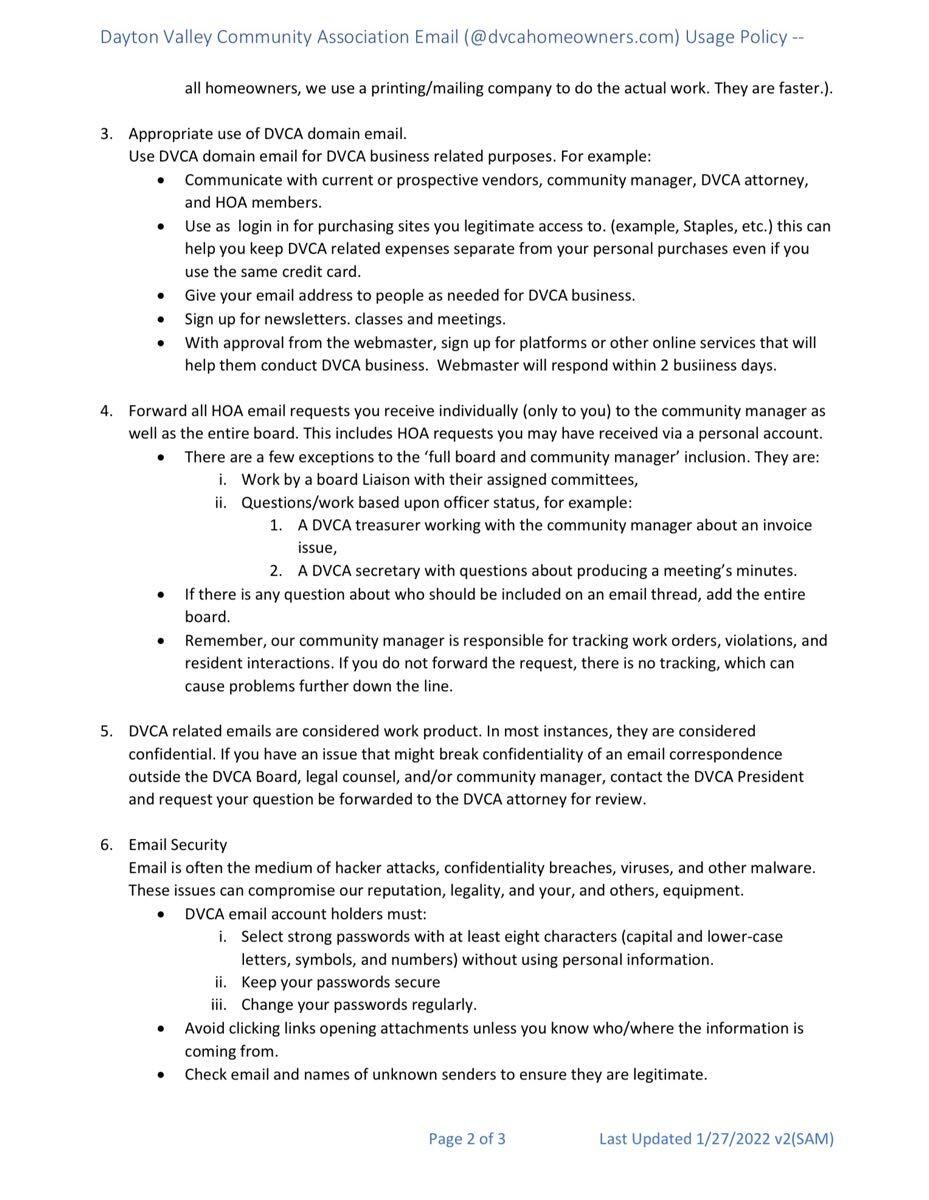
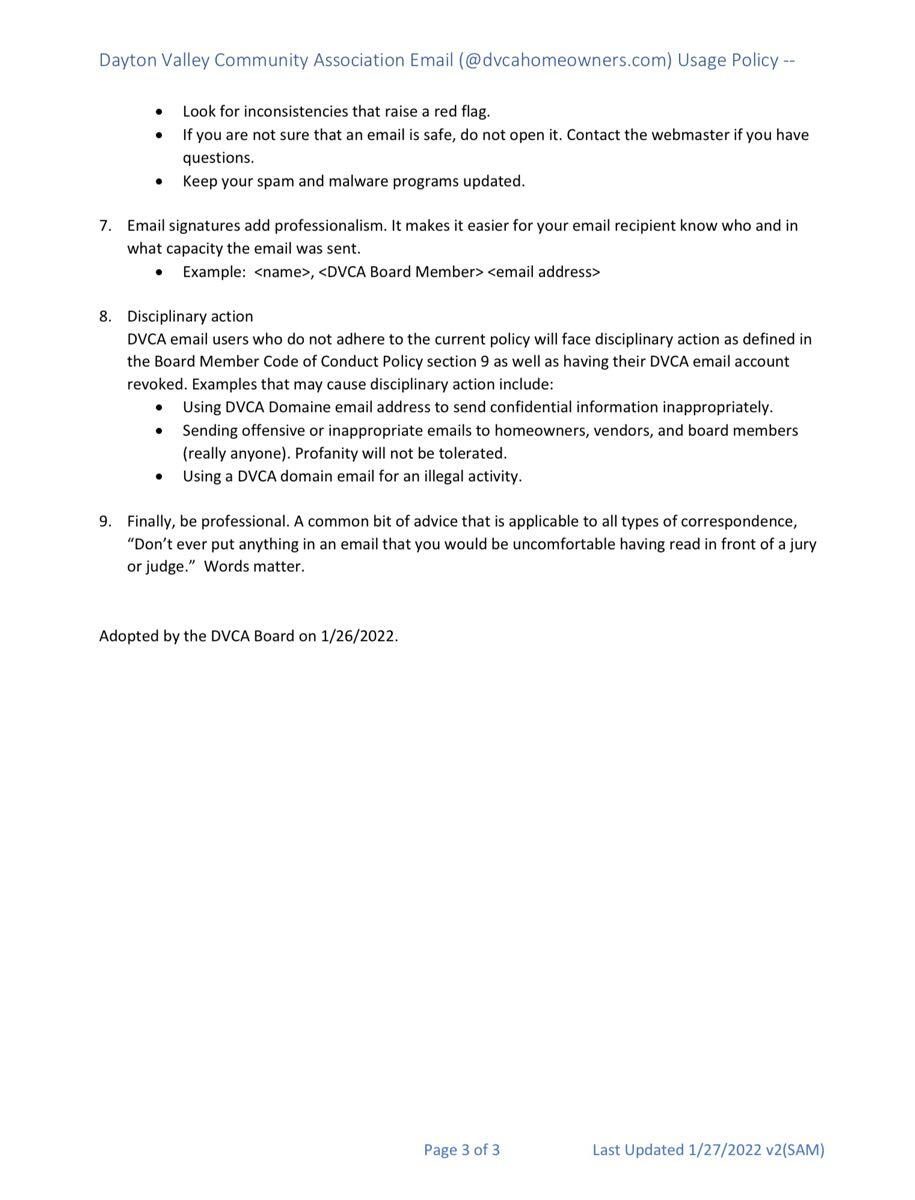
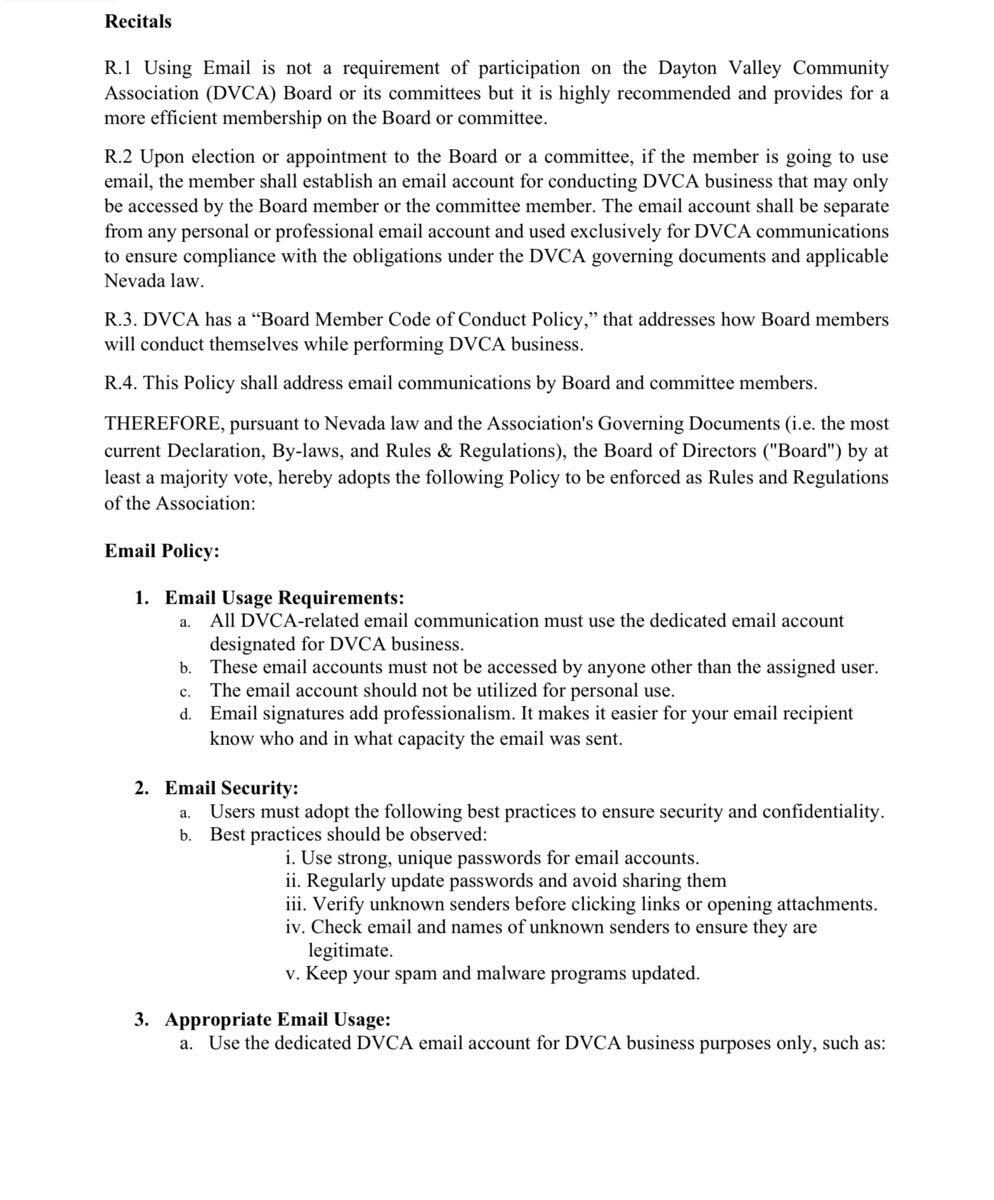
In 2024, every sitting board member used an official DVCA email address hosted through Rackspace. The association’s website and email system were managed by a volunteer system administrator responsible for ensuring continuity and secure storage of board communications.
Immediately following the 2025 board election, that administrator was abruptly dismissed. As a result, there was no opportunity for a proper archiving process. Any missing emails are not the result of negligence or bad faith by individual board members, but rather a direct consequence of the new board leadership’s decision to cut off access to the systems before any standard transition procedures could take place.
Moreover, it was the 2025 board that chose to abandon official DVCA-hosted accounts in favor of personal Gmail addresses or other third-party providers. This change occurred after the administrator’s removal. The current lack of centralized, association-managed communication raises serious concerns about data retention, transparency, and long-term accountability.
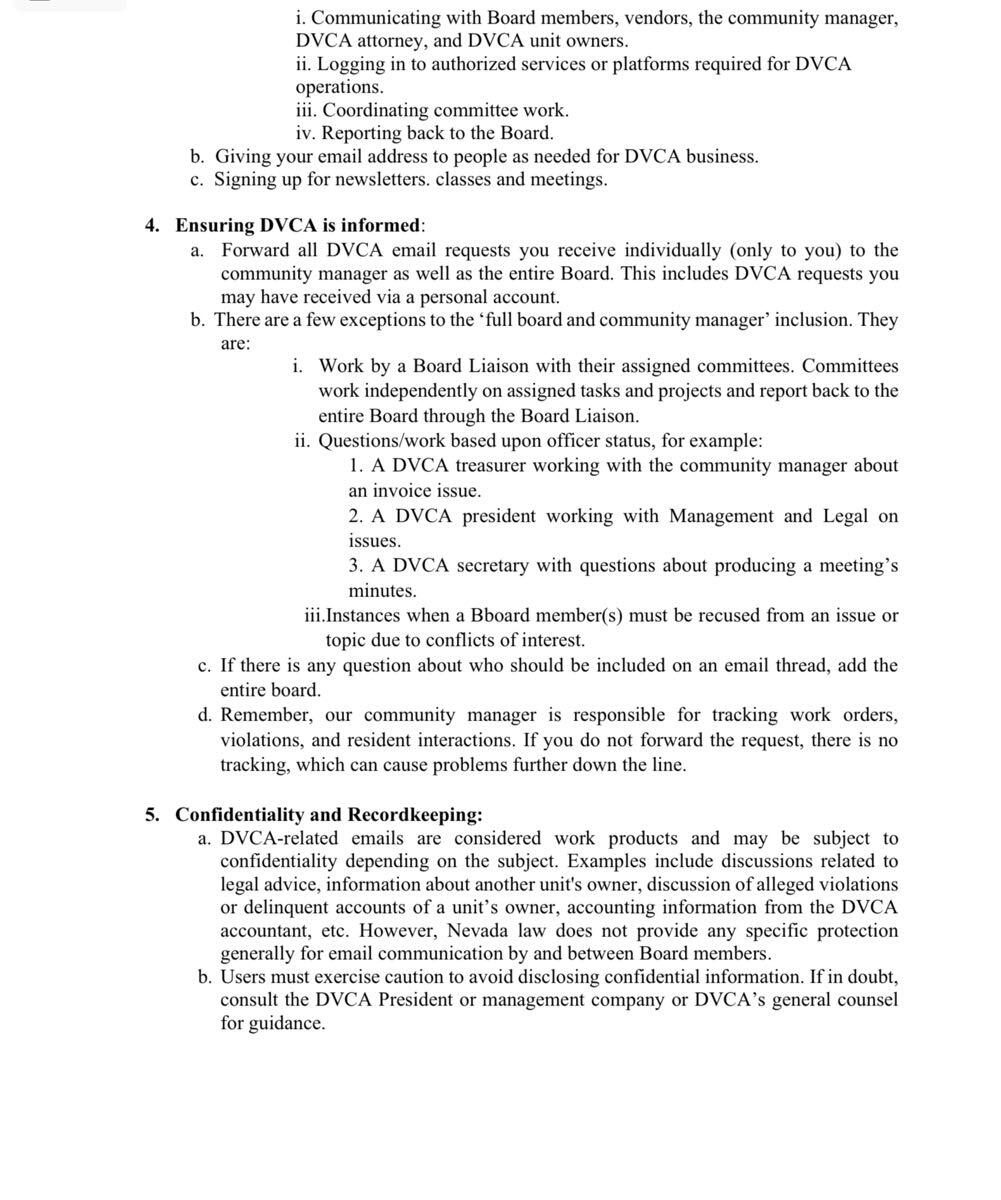
It is worth noting that under Nevada law and best practices for HOA governance, all board business, regardless of platform, must be preserved as association property. That burden lies with the board as a whole, not with any single member or administrator.
In short, the public narrative being pushed is not only misleading, it is reversed. The 2024 board used official email accounts. It was the 2025 board that changed course, terminated the system administrator, and disrupted the archiving process.
If the goal is truly to foster transparency and responsible recordkeeping, the community deserves honest accounting, not selective framing.
⸻
Cross check the post above against Nextdoor guidelines.
✅ 1. Local Relevance
Guideline: Posts must relate to local issues, events, or topics relevant to your neighborhood.
Status: Compliant
The post discusses the Dayton Valley Community Assn’s internal email policy and administrative transitions. This is a legitimate local governance issue directly relevant to residents.
⸻
✅ 2. No Public Shaming or Targeting
Guideline: Do not publicly name or single out neighbors or individuals for negative treatment.
Status: Compliant
The post does not name or identify any individual by name, position, or description. It refers only to “the 2024 board,” “the 2025 board,” and “a system administrator” without making personal attacks. The language focuses on procedural events and policy implications, not personal blame.
⸻
✅ 3. Civility and Constructive Discourse
Guideline: Posts must be respectful and foster civil discussion.
Status: Compliant
The tone is professional, factual, and free of insults or inflammatory language. Words like “misleading,” “reversed,” and “political revisionism” are strong but are used to describe narratives, not people, and remain within the bounds of civil critique.
Recommendation
To further reduce the risk of misinterpretation or moderation:
• Consider softening “political revisionism” to “selective framing” or “misleading framing” if you want to be extremely cautious.
• If posted in the Newsfeed, avoid using bold headers or newspaper-style formatting unless you’re sharing a photo of the article or linking to an external blog or publication.