Well…it finally happened.
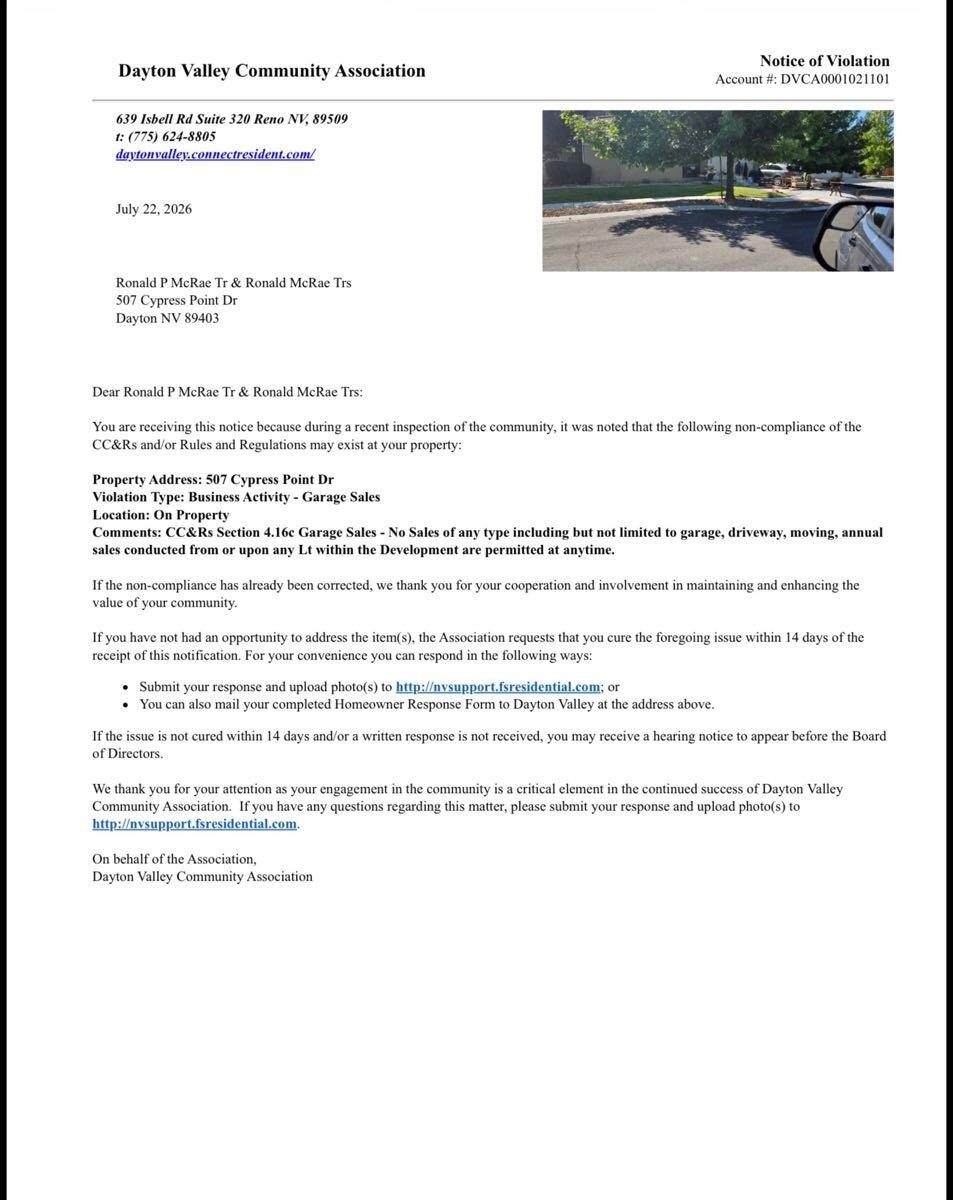
I received a violation letter from the HOA over a garage sale.
Ironically, the “fix” is incredibly simple.
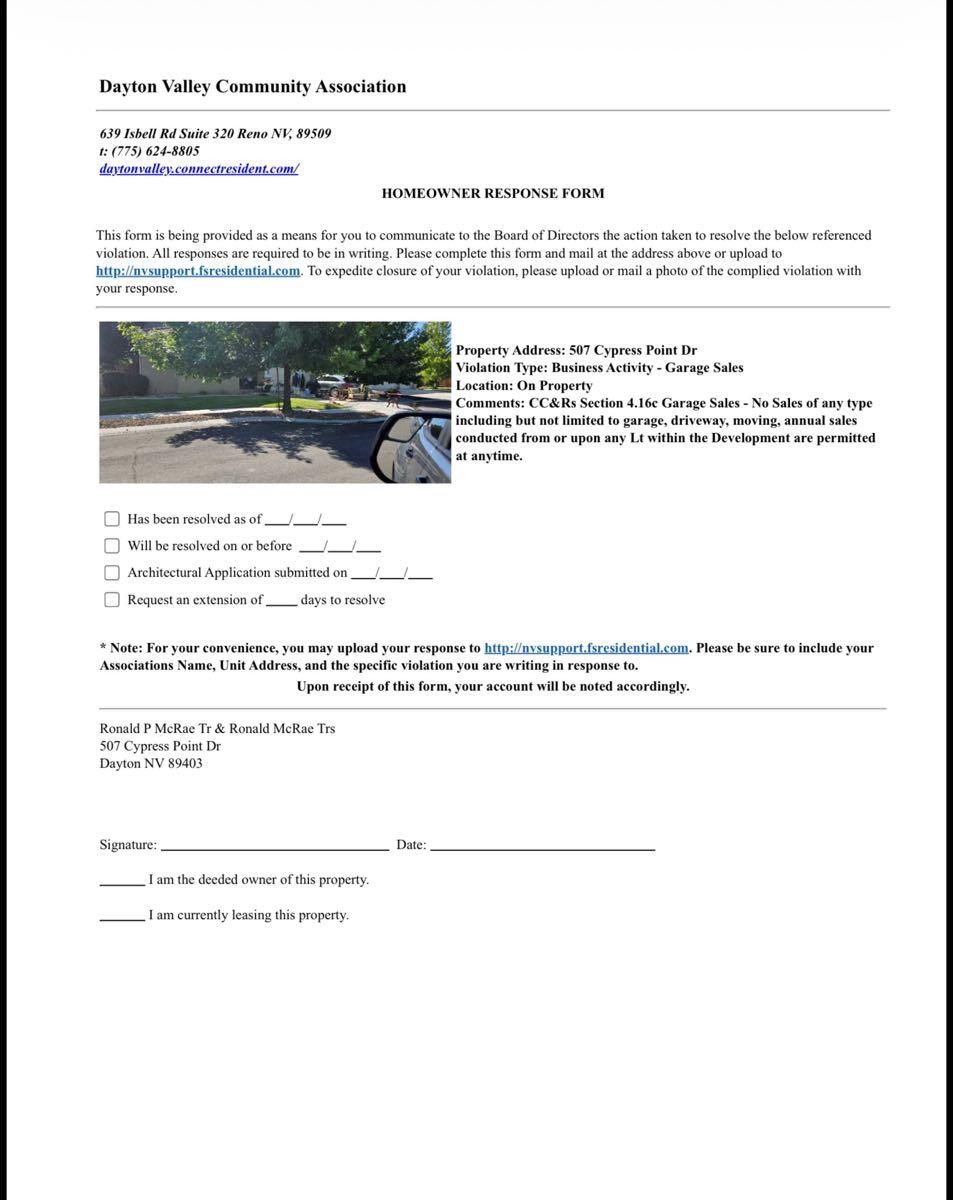
All I have to do is check the box that says “This has been resolved,” add the date it was corrected, and send it back. Assuming there are no additional garage sale violations within the next year, the matter is over because our governing documents reset habitual violations after one year.
What concerns me isn’t the violation itself. It’s how it was documented.
The notice letter shows the violation date as Wednesday, July 22nd. This is the same day I received the letter. (See picture #1 & #2)
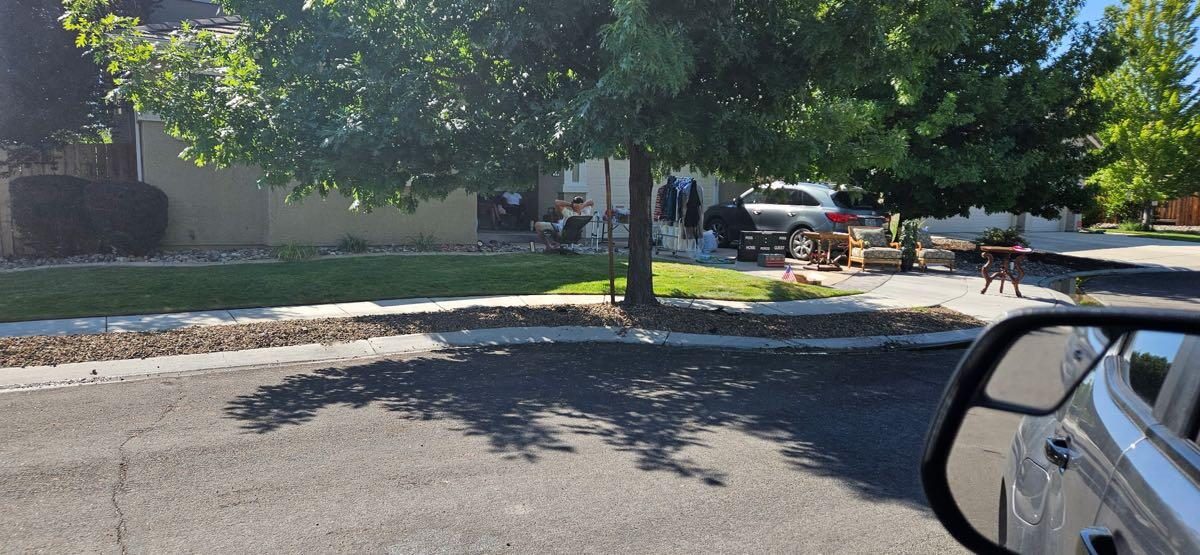
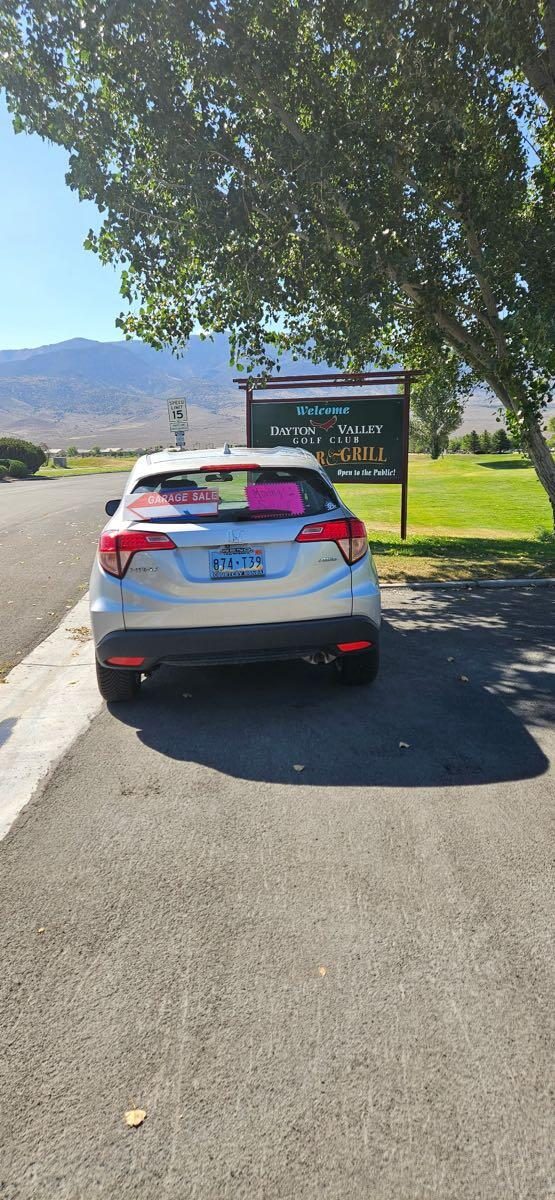
The attached photographs do not include a date or time. (See picture #3 & #4)
The photographs do not show my house number or street address, even though historical violation notices have consistently included both the address and a timestamp so there is no question about when the alleged violation occurred or which property was involved.
One of the undated photographs is simply a vehicle displaying a garage sale sign. There is no address associated with the vehicle, and the photograph does not establish any connection between that vehicle and my home.
The photographs were also taken by a Board member rather than property management. During my time on the Board, legal counsel repeatedly warned us about the importance of consistent enforcement and the legal risks associated with selective enforcement. I was also present when legal counsel advised the Board regarding the use of vehicles as evidence and cautioned against attempting to associate license plates with residences for enforcement purposes.
So now what happens?
Instead of a straightforward violation notice, the Association’s attorney is going to have to review whether the notice complies with Nevada law, whether the evidence is sufficient, whether the procedures followed the Association’s own historical practices, and whether the enforcement was applied consistently. If the matter is not dismissed, there will likely be a hearing before the Board.
This is exactly the kind of situation that drives up legal expenses.
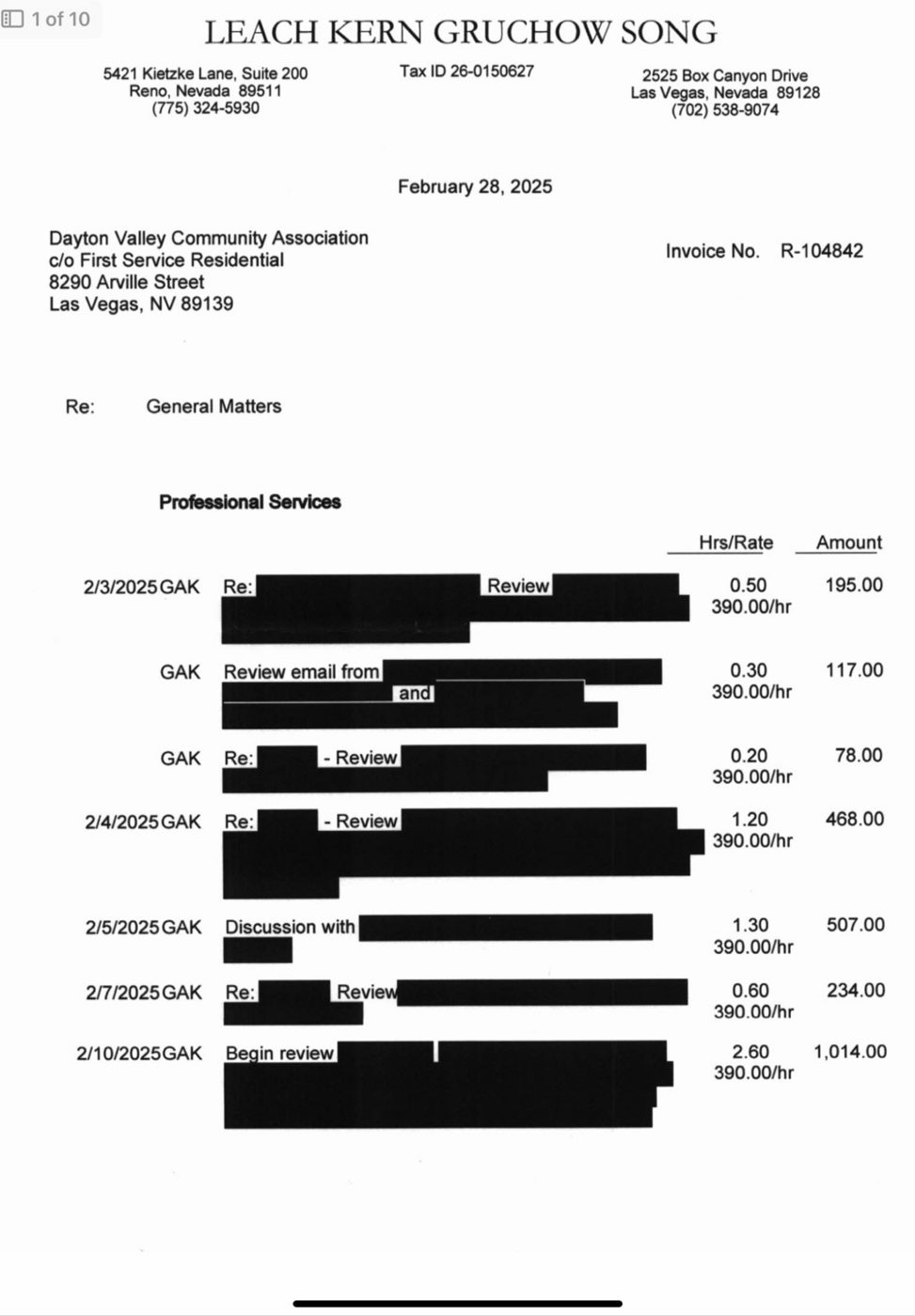
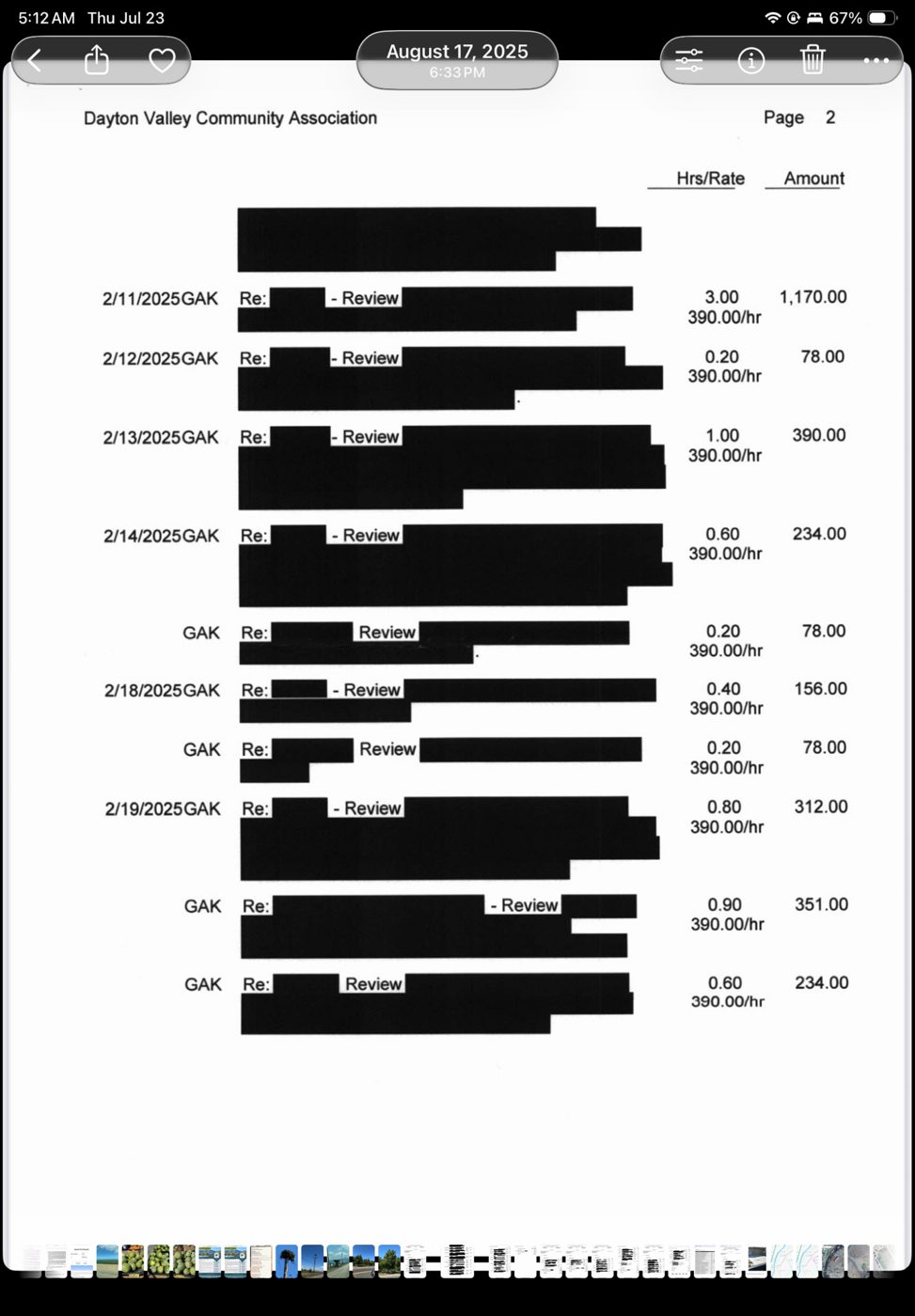
Every time a violation is prepared without basic identifying information, or in a manner that raises avoidable procedural questions, the Association will have to involve legal counsel to answer questions that could have been avoided from the beginning. Those attorney reviews, legal opinions, hearing preparation, and Board discussions are all paid for with homeowners’ assessments. Legal charges $390/hr. (See picture #5 & #6). Note that everything is redacted on the invoice. What is the board hiding?
This isn’t about one garage sale. It’s about good governance.
If the Board is going to enforce the rules, it should do so carefully, consistently, and in a way that minimizes unnecessary legal expense. A complete violation notice with clear evidence protects everyone…the homeowner, the Board, and the Association.
I’ll be asking HOA counsel to review the notice and, if the Board elects not to dismiss it, I’ll request a hearing. I’ll share what I learn so everyone understands how the process works and what our assessments are paying for.
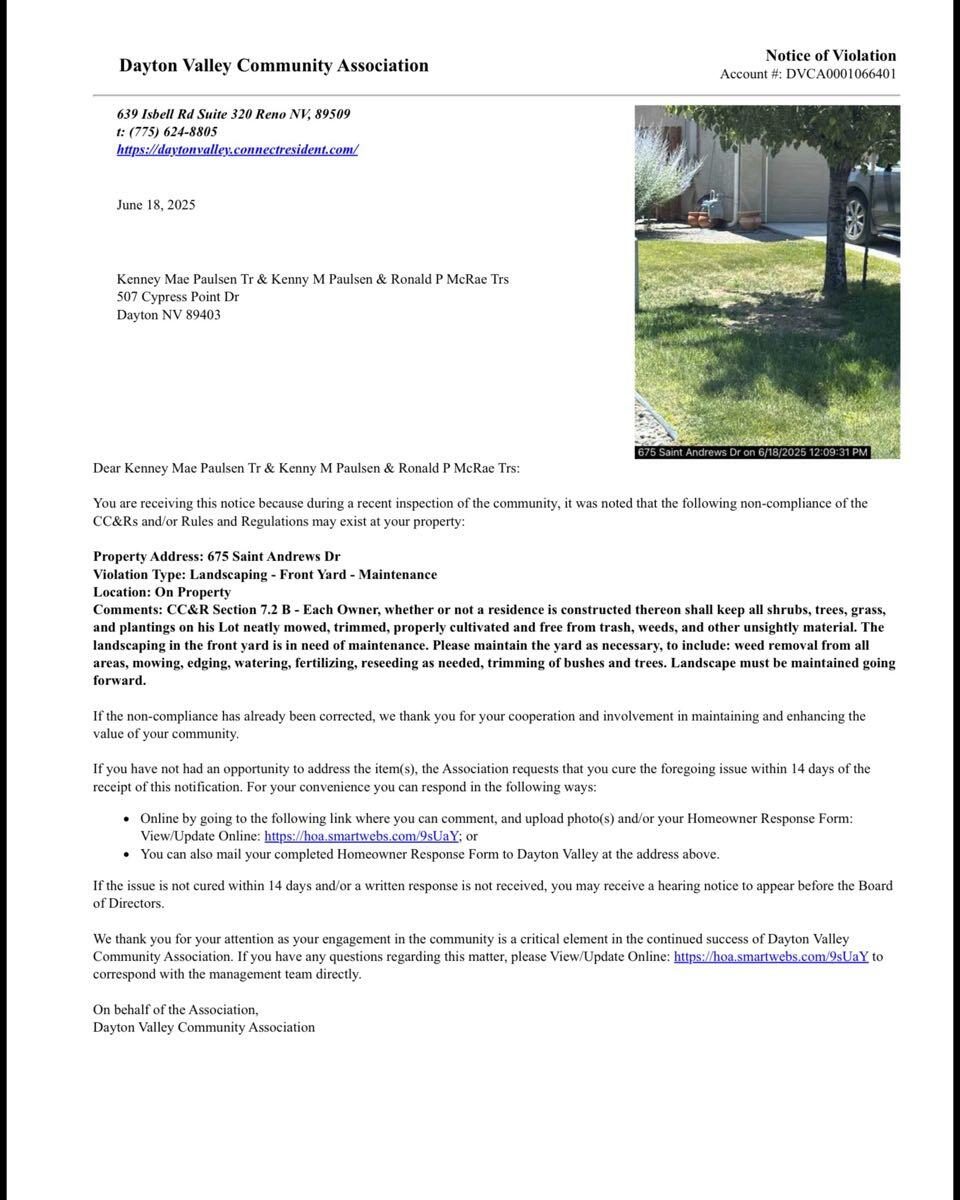
For your edification, I included an older violation letter initiated by property management. Note the date/time stamp and address on the bottom of the photo (See last photo).
How did a deficient violation letter get sent with errant dates and lack of proof? First Service Residential Property Management. Our contract stipulates “no provisional managers” but the board, last year, allowed a junior property manager to oversee our community. It seems the violation was submitted without dates and our PM had to make something up. So… they used the date of submission as the date of violation. This, and the 1-year habitual clause, is why photos must be dated stamped.