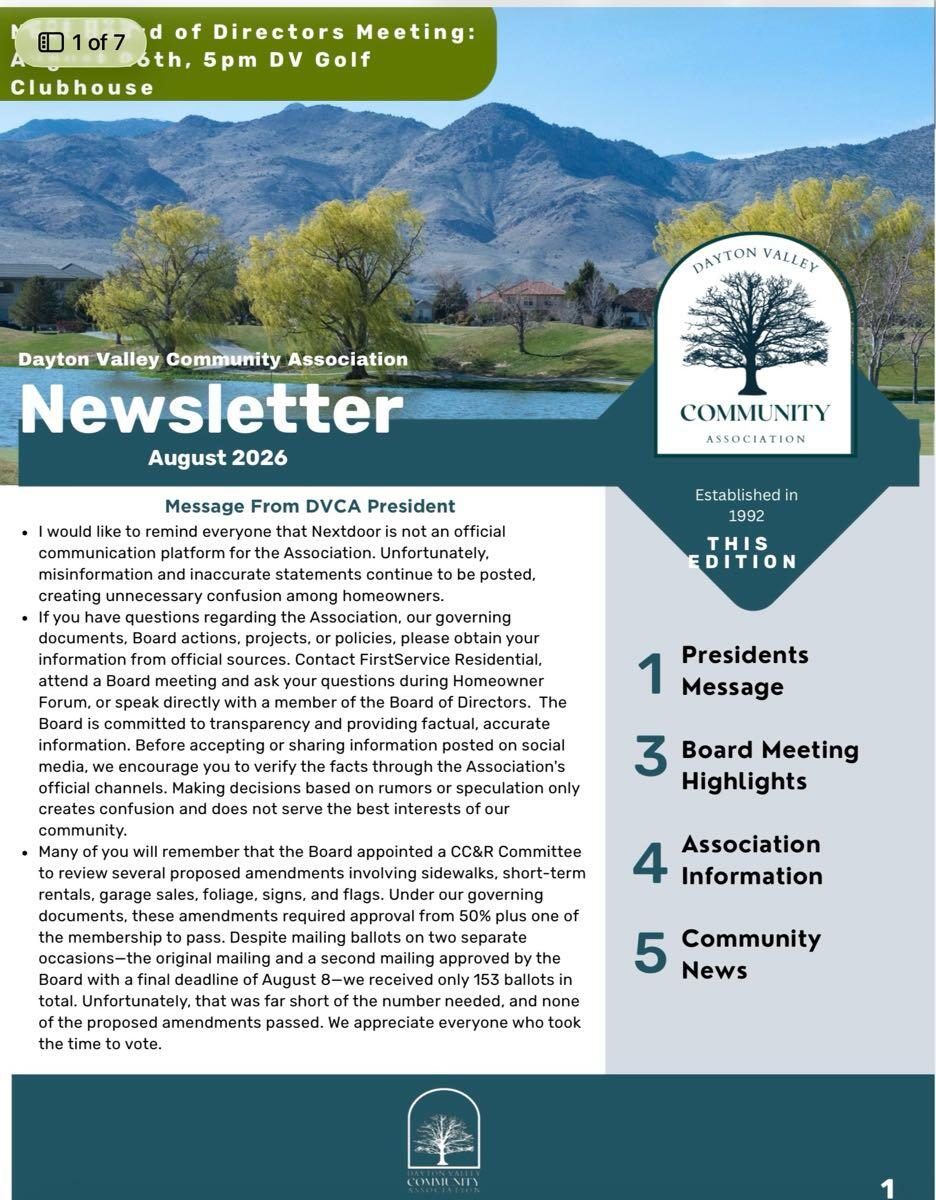
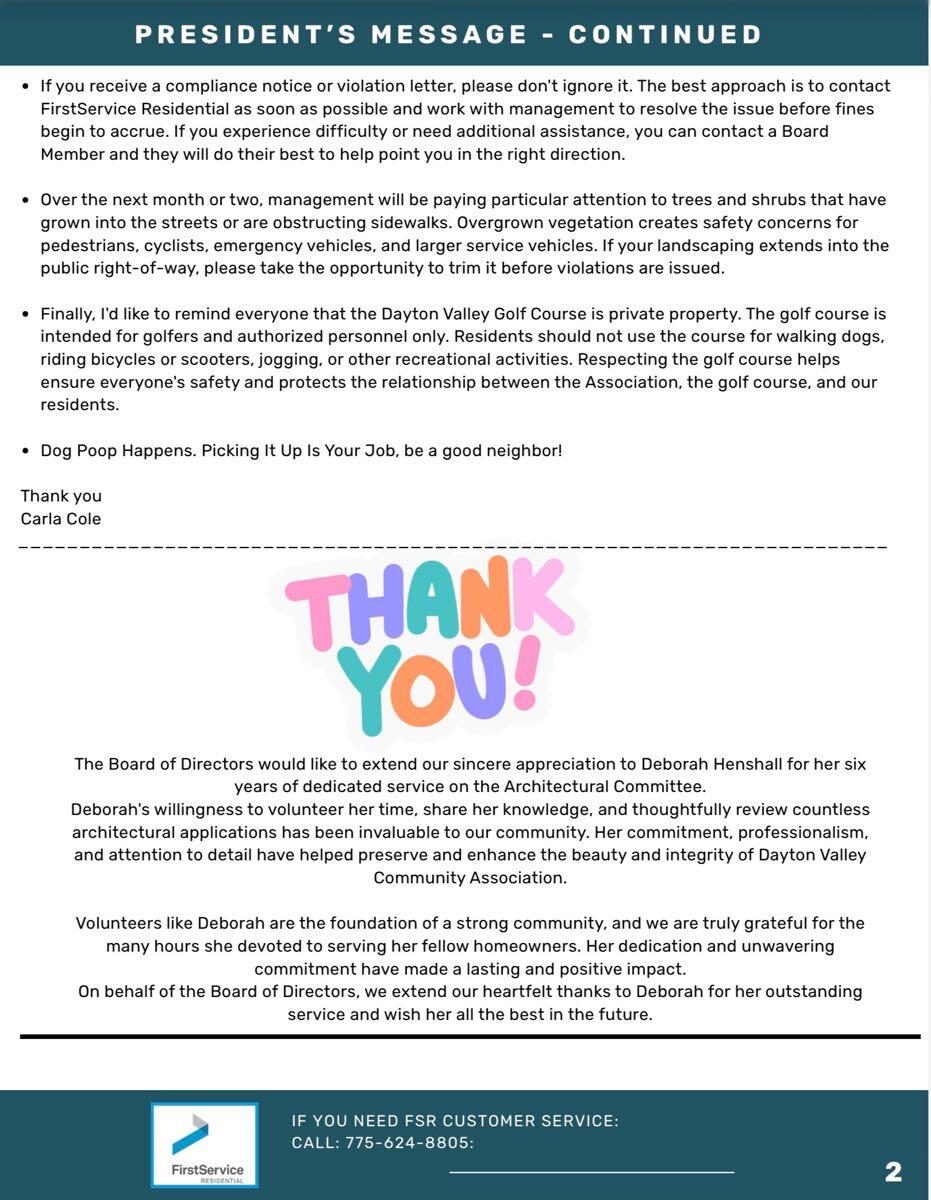
A few thoughts on the August DVCA newsletter…
The Board spent months on CC&R revisions, countless volunteer hours, and what appears to be well over $10,000 in legal fees.
The result?
153 ballots out of 824 homes. Less than 19% participation. The amendments never had a realistic chance of passing.
Our community is divided, and large groups of homeowners simply do not support the current Board or the direction it is taking the Association.
I warned from the beginning that this initiative would fail, and fail spectacularly, because of the people chosen to lead it. The moment the committee chair and Board liaison were appointed in 2024, the effort was effectively doomed. I repeatedly urged them to bring together both the pro-HOA and anti-HOA factions. Instead, the process became divisive, multiple committee members resigned, and the results speak for themselves.
Here’s the part I don’t understand.
The Board already has the authority to grant waivers for many restrictions in Section 4 of the CC&Rs, including things like garage sales and even large train displays built in your garage. If the Board wanted to allow garage sales, it already had a mechanism to do so. An expensive CC&R rewrite wasn’t necessary.
The newsletter also warns homeowners about “misinformation” on Nextdoor.
I assume that’s directed at my posts about garage sales, the violation process, and the Board’s authority to grant waivers.
If anything I’ve posted is incorrect, identify it. Point to the governing document and explain why. Calling something “misinformation” without identifying a single false statement isn’t transparency. It’s the same tired playbook we’ve seen from this Board for years. It’s why only 153 people voted.
Finally, the newsletter encourages homeowners to attend Board meetings and ask questions. What it leaves out is that homeowner comments are limited to three minutes at the end of the meeting, after all Board business has been conducted, and the Board is under no obligation to answer any questions.
Questions and discussion are not the problem. Open dialogue and accountability make for a stronger community.