Want an example of how DVCA wastes homeowners’ money?
Here’s one that played out over several years, and much of the story is sitting right there in the Lyon County Recorder’s public records.
A few years ago, a homeowner in DVCA was incarcerated and his house essentially became abandoned.
The water was shut off. The lawn died. The front fence blew down, exposing an overgrown backyard. At some point the house was burglarized, the garage door was damaged, and it was left partially open.
It was an absolute nightmare for the surrounding neighbors. I completely understand why something needed to be done. A property in that condition is an eyesore, a security problem, and potentially affects the value of every house around it.
The question is how the Board chose to deal with it and how much homeowners paid for that strategy.
DVCA initially did what it normally does: issue violations.
Dead grass? Violation.
Fence? Violation.
Garage door? Violation.
Property maintenance? More violations.
At $100 per week for continuing violations, the numbers piled up. At one point, the amount being claimed against this property was more than $30,000.
There was just one enormous problem.
The property was already financially underwater.
The public records showed multiple loans secured by the property, including a relatively recent loan modification. Looking at the debt against the property and the condition of the house, there was an obvious question that should have been asked before spending thousands of dollars chasing HOA fines:
Even if DVCA wins, where exactly is the money going to come from?
And then it got even more expensive.
The homeowner attempted bankruptcy.
DVCA, through LKG Law, became involved in the bankruptcy proceedings because of the HOA’s claims and liens against the property. Legal work was performed to preserve DVCA’s position and distinguish the Association’s property-related lien rights from the homeowner’s personal bankruptcy obligations.
LKG ultimately succeeded in protecting DVCA’s position in that proceeding.
But winning a legal argument and collecting money are two very different things.
The Board continued down the same road.
Letters.
Demands.
Liens.
Default notices.
More legal involvement.
More time.
More money.
Meanwhile, the basic economics of the property hadn’t magically changed.
And now we can look at the public record and see how the story ended.
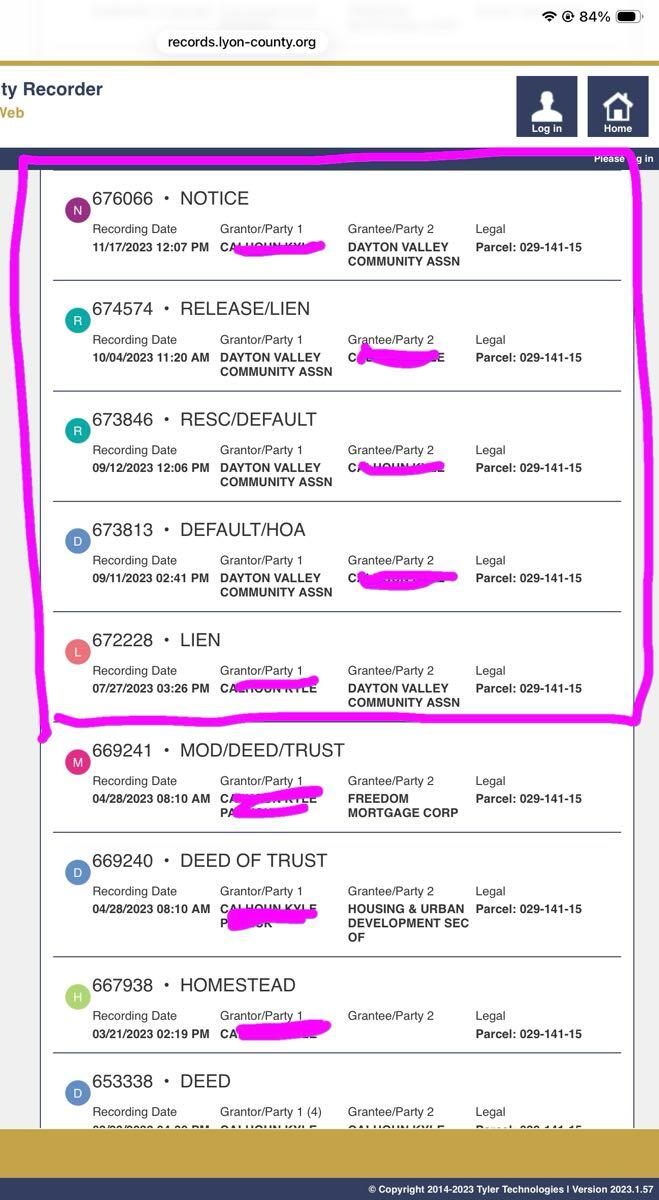
In July 2023, DVCA recorded a lien against the property.
In September 2023, DVCA recorded a Default/HOA.
The very next day, DVCA recorded a rescission of that default.
In October 2023, DVCA recorded a release of its lien.
Then the cycle started again.
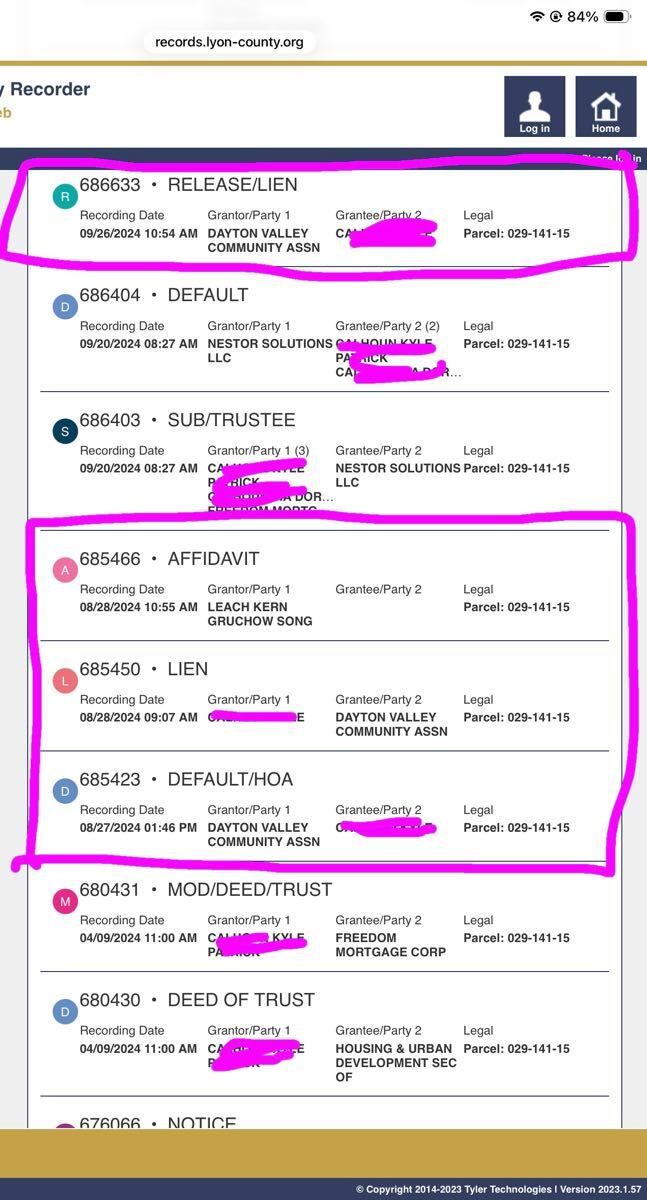
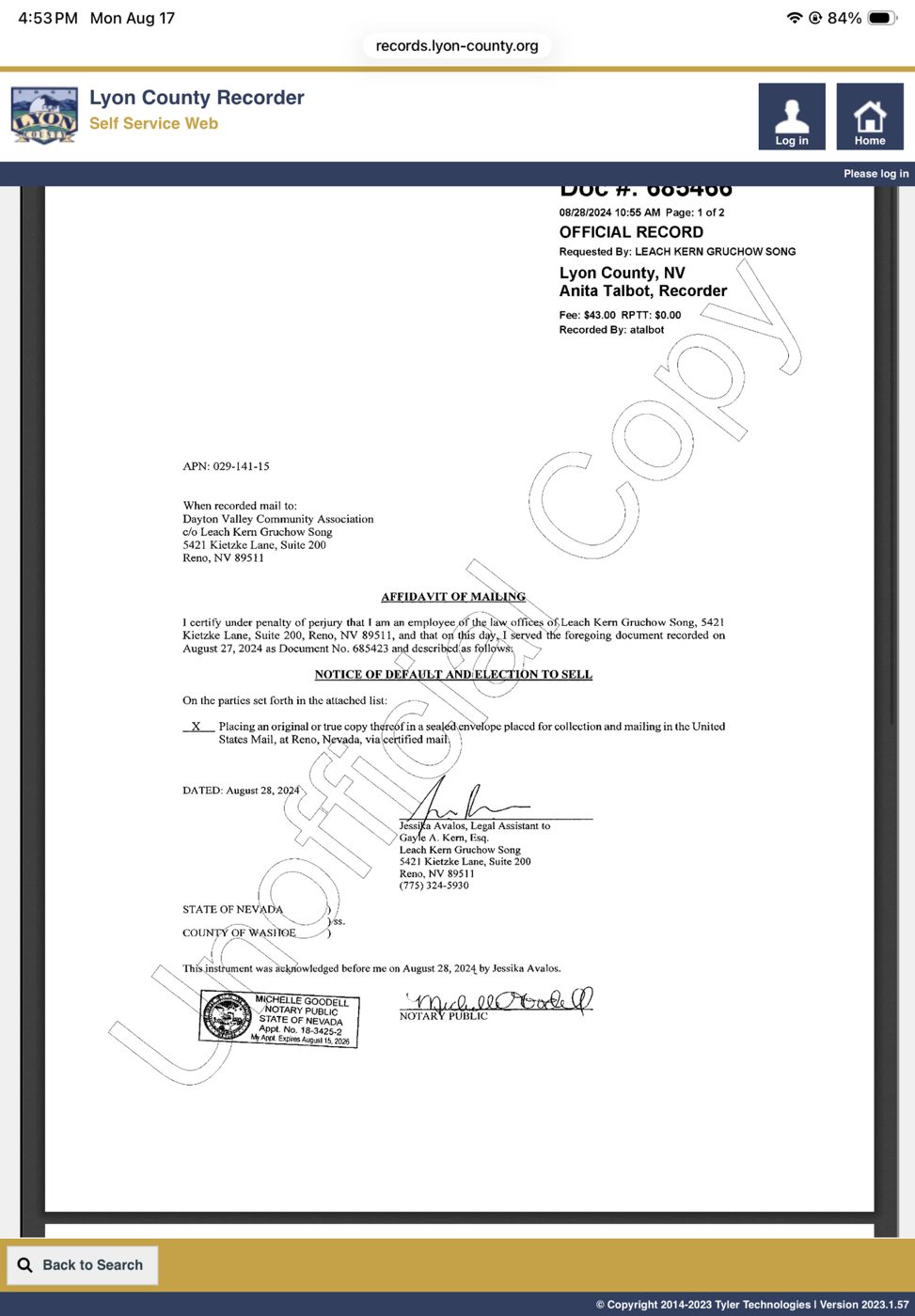
In August 2024, DVCA recorded another Default/HOA.
The next day, another DVCA lien was recorded.
By September 2024, the mortgage trustee was recording its own default.
Then, on September 26, 2024, DVCA released its lien again.
The mortgage foreclosure process continued.
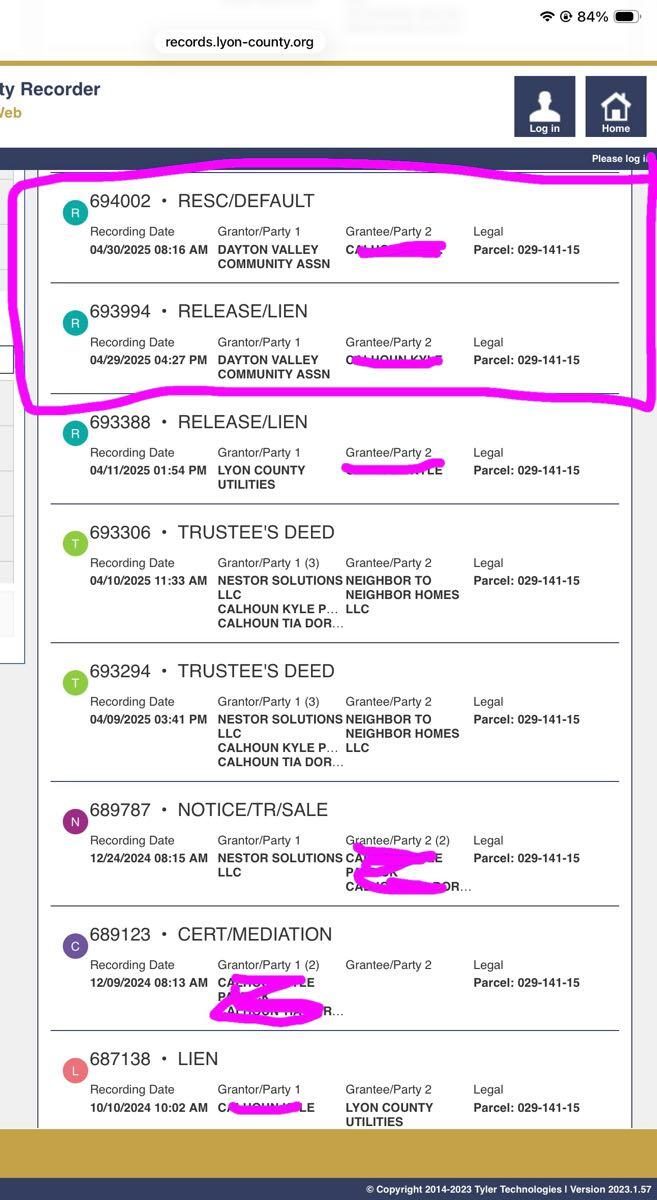
A Notice of Trustee’s Sale was recorded in December 2024.
Trustee’s deeds were eventually recorded in April 2025 transferring the property to Neighbor to Neighbor Homes LLC.
And what happened to DVCA’s latest attempt?
On April 29, 2025, DVCA recorded another RELEASE OF LIEN.
On April 30, 2025, DVCA recorded a RESCISSION OF DEFAULT.
Game over.
Look at the screenshots from the Lyon County Recorder. This isn’t gossip. The recorded-document history is right there.
This is why I keep questioning the Board’s use of legal counsel.
The issue isn’t whether the abandoned property was a problem. It absolutely was.
The issue isn’t whether DVCA had the right to enforce its governing documents. It did.
The issue is whether anyone stopped to perform a basic cost-benefit analysis before repeatedly spending homeowners’ money pursuing an asset that was already buried under superior debt.
If a property is worth less than the debt ahead of the HOA, piling another $10,000, $20,000 or $30,000 in fines onto the ledger doesn’t create $30,000 of equity.
You cannot lien your way into equity that doesn’t exist.
And every letter from legal, every bankruptcy filing reviewed, every demand, every lien prepared, every default document, and every subsequent release costs the Association money.
That’s OUR money.
This is also why I have such a problem with the way LKG is used by this Board.
A threatening letter from an attorney may look impressive. A lien may look impressive. A $30,000 violation balance may look impressive.
But homeowners should be asking a much simpler question:
What did we spend pursuing this property, and what did DVCA actually recover?
Those two numbers should be incredibly easy for the Board to provide.
If DVCA spent thousands upon thousands of dollars in legal fees pursuing this property only to eventually release its liens as the property went through foreclosure, then homeowners deserve to know exactly what the return on that expenditure was.
Because legal enforcement isn’t supposed to be about generating paperwork.
It is supposed to accomplish something.
And sometimes the financially responsible decision is recognizing when, to quote our HOA President, “the juice isn’t worth the squeeze”.